
The concept of ‘fitting in’, of ‘belonging’, has always felt foreign to me. Growing up as a vision impaired person, I’ve often found myself on the periphery, pushed out of situations by barriers whether environmental, organisational or attitudinal.
The world is not designed for vision impaired people like me, we know this; I’ve wielded the line as a key message in many a blog post and yet I haven’t addressed how it impacts the feelings I have about my place in society.
It’s time to change that.

I wrote extensively about my experience of loneliness and isolation way back in 2018, a mere three years into my blog’s existence. That post provoked such a visceral response from people sharing their own experiences of the same feelings. Hearing so many of my thoughts echoed back to me in those comments was surprising at the time as I wasn’t expecting them to be so universal. Although it’s never nice to hear that others are experiencing similar hardships, I discovered a lot of reassurance after putting that piece out into the world and there was something quite powerful in learning that I wasn’t alone In the isolation I wrote about so openly back then.
A part of me naively thought that all the feelings of isolation that were intrinsic with my time in school would magically disappear as I entered adulthood. I’d heard such great things about life in your twenties with so many claiming it to be the decade where you truly find yourself and your place in the world, so surely this was my time to finally shake all the feelings of loneliness I’d harboured for the best part of my teens?
You can imagine my disappointment when I realised that wasn’t the case.
Having now crested the half way point of my twenties, I’ve realised that being aware of societal barriers and the situations that provoke this estrangement I feel with a sense of belonging doesn’t make me exempt from their effects.
Let me dive a little deeper into it all.
Belonging as a vision impaired person in a visual world
My relationship with the concept of belonging has always been a complex one; it’s a dull ache, sometimes easy to ignore but often impossible to soothe when exposed to aggravating factors.
Often the consequence of inaccessibility, the ache is stubborn in its inevitability, unrelenting when struck by the hand of exclusion.
If left unchecked this ache, this isolation possesses the power to swallow me whole.
It originally manifested as a result of a feeling of ‘otherness’ that gripped some moments of my childhood and teens, each stereotype or snide comment inflaming the pain and casting a sense of belonging further from my reach.
Explaining my impairment to new school friends was a difficult feat especially when I was yet to fully grasp the concept of it myself and the stereotypes that provoked negativity meant that I found it difficult to discover kinship with new people.
The void between my peers and I always felt ominous in that educational setting. Being in a different year group to most of my friends meant that our free lessons rarely aligned and so I’d spend them alone just as I did so many lunch and break times when my group couldn’t be found in their usual spot. I rejected that solitude for its symbolisation of ‘not belonging’ and I grew frustrated by how accustomed I’d become to lack of understanding, patronisation and belittling attitudes, all of which pushed against the canteen or sixth form block doors, denying me access and forcing me backwards into my usual secluded corner.
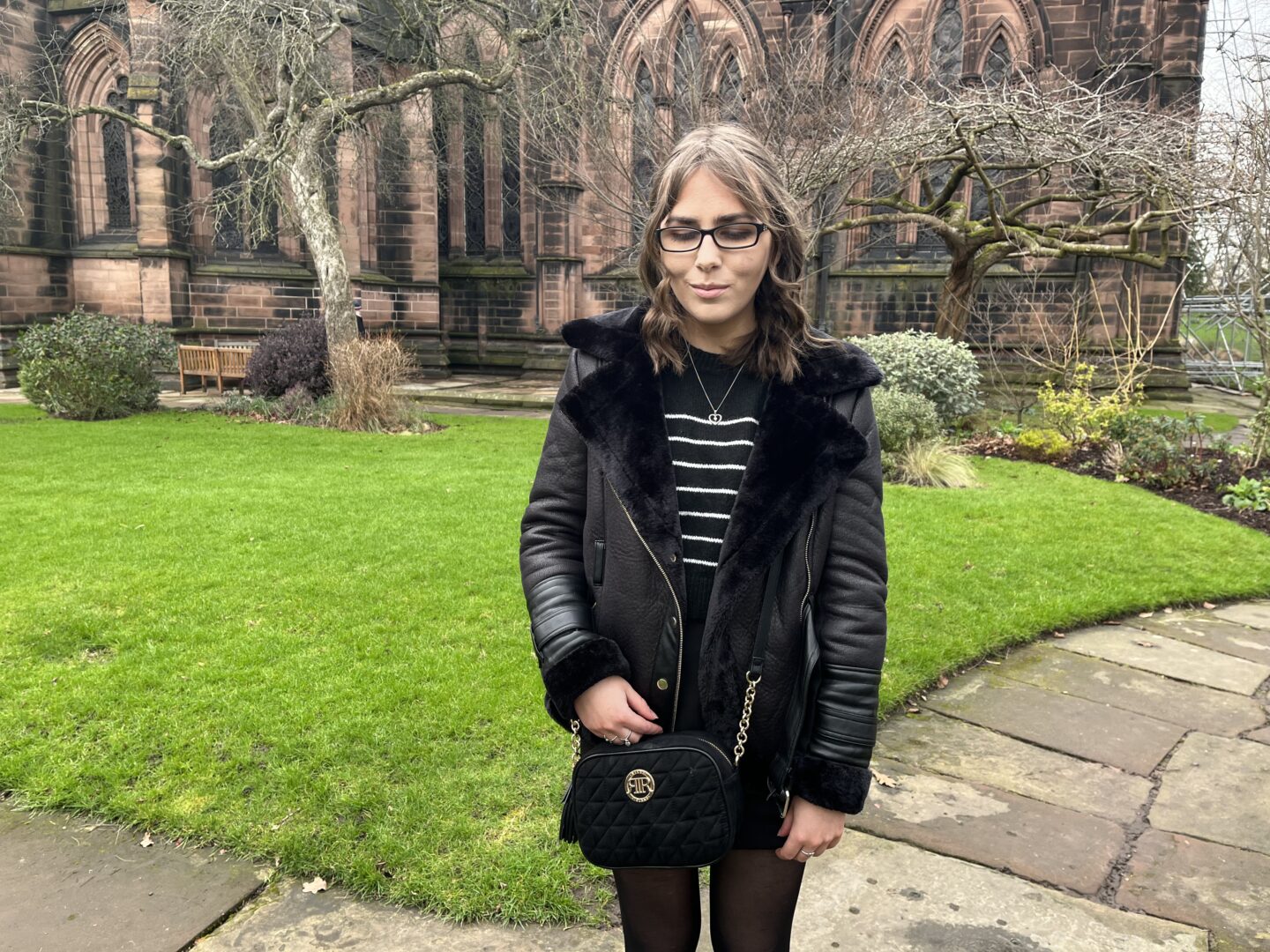
Now a little older, how I identify with ‘belonging’ has shifted slightly. I don’t find myself ‘alone’ anymore thanks to strong friendships and found connections in the VI community, and yet it’s still easy to feel lonely in the face of exclusion.
That is most often the triggering factor here. Navigating the world as a disabled person, I sadly expect it, unconsciously, even. I know that for as long as exclusion has a pulse, the ache will remain, existing in the divide between me and the parts of society that are not accessible. A gap only a shift in attitudes and a commitment to access and equality can bridge.
Don’t get me wrong, sometimes the ache retreats, allowing space for a sense of belonging to flourish. The pain yields in the embrace of a loved one, forgotten when laughter is shared with friends, repurposed as experience I can drawn on in messages exchanged with a mentee, left in reality when I escape into the fictional world of my latest read and replaced by the tangle of nerves and excitement (mostly nerves) that comes with tuning into my football team’s latest fixture.
These are just some facets of my life that afford me the reminder that I do belong. Deep down I know I do, I know there is a place for me and I fully intend on making the most of that space.
But for me, access and inclusion are intertwined with the concept of belonging so when I find myself having to so often ask for both, it’s easy to feel estranged from the feeling.
It’s rare that I experience the ache of isolation as intensely as I did when I was younger. As I’ve said before, I’ve grown to know my worth as a disabled person and I no longer allow societal expectations and stereotypes to dictate how I value that worth. But, of course, there are times, when equality feels particularly fragile, which evokes a flare up.
Before that spike, it’s merely a background hum as I absorb the routine of everyday life, it clings to a small fibre of my being but is often camouflaged by the hustle and bustle of the working day or the excitement of making future plans with family and friends.
But sometimes putting those plans into action can come with consequences. Let me give an example.
Fellow concert-goers will recognise the butterflies that find a home at the base of your ribs when your favourite artist announces a tour but it’s only disabled fans that will know that those flutters exist for more reasons than pure excitement. Anxieties about disabled access tickets, how to purchase them, how limited they are in their capacity and whether the venue itself is accessible all surmount to the same overarching question; will I feel like I belong here? It’s easy to feel isolated when you’re three hours into a phone line queue, waiting to get through to someone on the other side whilst scrolling through social media, absorbing posts about non-disabled fans having secured their tickets within a few minutes.
And there, on cue, the ache returns, stirring from its dormancy just as it does when I have to wait for my requests for work documents to be provided in an accessible format to be met, often feeling one step behind when it comes to being able to provide feedback due to not having access at the same time as everyone else.
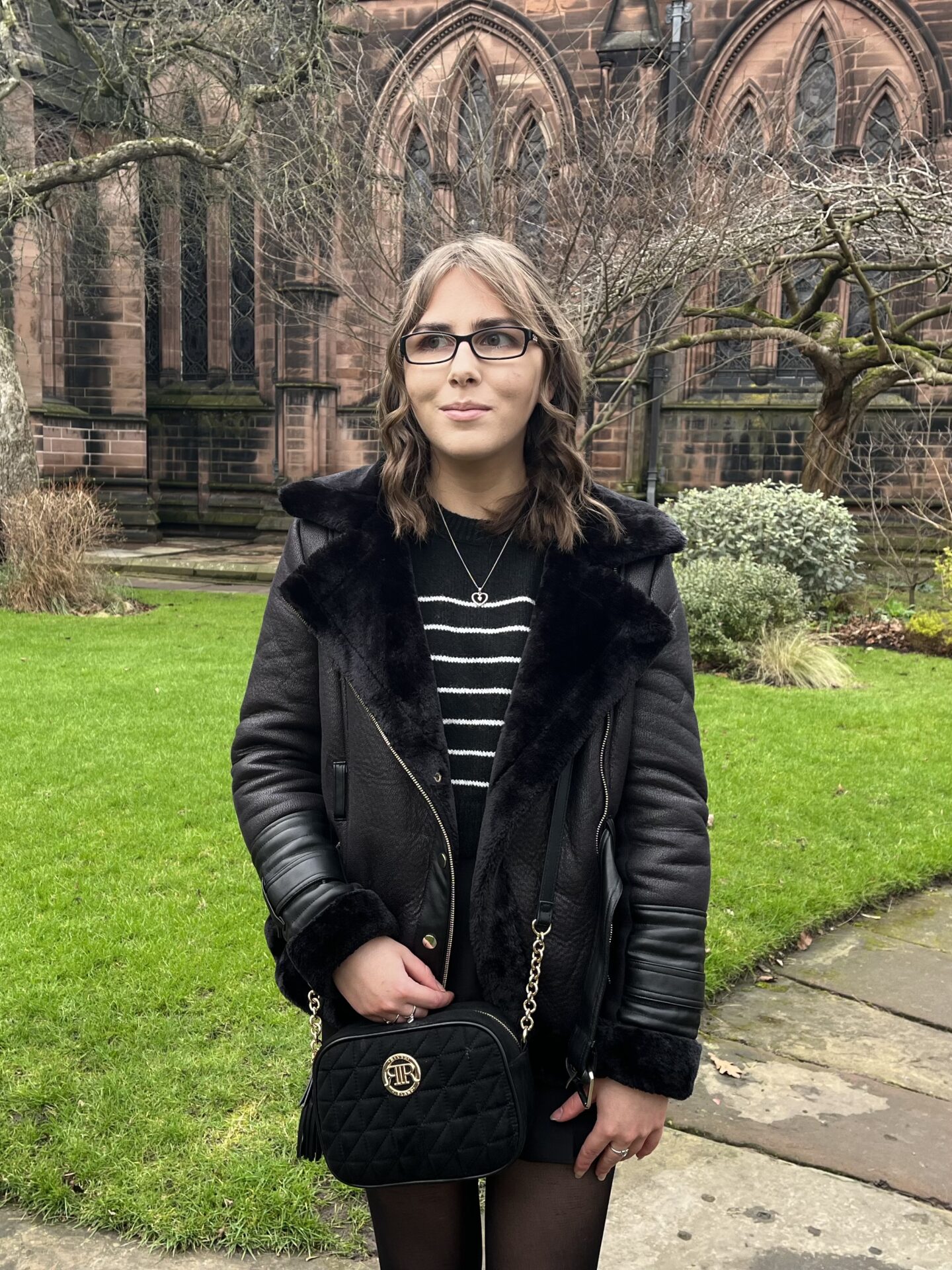
This isolation is mostly a temporary feeling but one that exists still. Often expected but always uncomfortable to be suspended within, no matter for how long that might be.
There are a number of situations that provoke the ache’s return; It exists in the social media posts that lack ALT text image descriptions, excluding vision impaired people from being able to react and interact in the same way as everyone else; it prevails when my pre-booked rail passenger assistance fails to turn up; It’s in the disorientation of a darkened bar when voices are muffled and unrecognisable. It’s in the fashion websites that turn away my custom due to, you guessed it, lack of accessibility.
But there are remedies and I’m so grateful to have reached a point in my life where I can recognise and implement them whilst being surrounded by people who endeavour to do the same. It’s the friends who pause our ramblings without prompt to describe a piece of clothing when we’re shopping or reach out a hand on a night out, coaxing me into a dance or a hug just as a reminder that they’re there; it’s the co-workers sending descriptions alongside their cute dog and life update pictures in the group chat so I’m not lost for context; it’s all the brands and organisations who make a conscious effort to make their social media content accessible.
It’s also in the small steps I’ve been taking over the years to assert my own version of belonging. The concept will always ebb and flow but as I write this, it’s not so much a question within myself but a request for society to take action to make access, equality and inclusion a reality.
Access reassures me that society welcomes me as a disabled person but when that isn’t the norm, it’s easy to feel as though I don’t belong. As disabled people, there are a lot of hoops we have to jump through in order to arrive at a similar level of access as non-disabled people and I think the ache will always intensify as a result of that race. But now that I am better equipped to self-advocate and assert my right to equality, I do find it a little easier to soothe.
I used to believe that I was the problem and that the loneliness I felt stemmed from the fact that I was ‘different’. However, I’ve since realised that it’s the product of societal attitudes and barriers, things that have so often shouldered me aside but I’m slowly learning to push right back.

I can now look over my shoulder at my younger self and hold the door open for her in an effort to prove that there is a place for her and she does belong.
My 16-year-old self’s decision to create this blog was based on some of the isolation and lack of sense of belonging I felt back then and the hundreds of blog posts I’ve penned have definitely succeeded in assuaging some of those feelings. For full transparency, laying all this out there is quite a nerve-wracking, emotional experience but if it helps just one person to feel less alone in what they’re facing then it’ll be worth it. Whilst the ache still persists at times, I know that writing will always be the perfect antidote.
Can you relate to the feeling of not belonging? Society is built on a structure that doesn’t always alter to accommodate everyone which means a lot of us can probably identify with the feeling of not fitting into certain pockets of the world. But ‘fitting in’ is a damaging concept, we shouldn’t have to change the shape of our being in order to slot into parts of society that have been built on rigid expectations and standards. No one deserves to feel shut out of parts of the world they want to access. A sense of belonging, equality and inclusion should never be something we have to ask for as disabled people, they’re basic human rights, but if you are finding yourself having to constantly fight for inclusion and feeling the strain as a result, please know that you are not alone.
You belong here.
Elin x
Share this:

Discover more from My Blurred World
Subscribe to get the latest posts sent to your email.
You May Also Like


The Comments
jody
great post Elin 🙂 And wonderful photos as always. As a mum of a disabled child, it’s really enlightening to read your experiences of school and growing up. We all hope that the difficulties (in relation to accessibility and in coming to terms with the nature of the impairment) at school will get easier as children and young people reach adulthood, but this is not the case. It seems the difficulties just simply change in nature.
Elin
jodyThank you, Jody. You’re right, the difficulties do change as time goes on and so does our approach to dealing with them. I’m so glad that there are people and organisations striving to make society a more equal place so that those challenges start to disappear. I hope you and the family are doing well 🙂
Jeanne
Thank you for sharing your thoughts and experiences. Noone can really understand what your life is like or what you face unless they have a similar challenge. I have been facing decreasing sight for the past 2 years due to Glaucoma and some other conditions. My experience has been that in some groups I am like a pariah cannot see well enough to enter conversations anymore and living in a remote area with no public transport have to rely on blessed hubby for rides to anything. Since I do not appear ill no one asks if I need any kind of help of any kind or invites me to coffee or lunch I do feel very isolated .
Elin
JeanneThank you for reading and sharing some of your own experience, Jeanne. I can completely relate to the isolation you’re describing, it’s not easy but I hope things get better for you soon.
Mister Kayne
Someone recently commented on how “comfortable in my skin” I seem and how inspired they are by my attitude towards my disability. While I appreciate the sentiment, the reality of living with a disability is often far more complex.
The truth is, maintaining a positive attitude takes incredible effort. Every day brings challenges – limitations that impact social interactions, opportunities, and even basic recreation. It’s a constant balancing act, juggling social acceptance with the demands of caring for a 6-year-old daughter and aging parents. This isn’t about inspiration. It’s about living. It’s about paying bills, having dreams, and nurturing the desire for social connection, just like everyone else. Burnout is real, and sometimes, all you want at the end of the day is a moment to acknowledge the hurdles navigated.
But here’s the thing: Hope persists. We, as people with disabilities, have aspirations and the will to overcome. We are capable, resilient, and deserve a world built for full inclusion.
#DisabilityAwareness #BeyondInspiration #LivingMyBestLife #LivedExperiences
Elin
Mister KayneI second this and I think a lot of other people will too. Thank you for reading and sharing some of your thoughts.
Lizzy
Lots of resonances. I recently had an experience where attempting to get my access needs met felt like an exhausting tug of war. The dissonance was further aggravated by the fact that other types (actually, just one as far as I can tell…) of disabled access *had* been considered and granted, but they were the bare minimum ( wheelchair access…). I don’t regret it, but I’m not doing that again in *that* way. And here you remind me again of other forms of access, ones I don’t necessarily need but are no less worthy. Disabled people exist in so many flavors and layers; learning about each other and advocating for all of our access needs (however much that ache tugs on us) only makes things better for all of us.
Jeanne
LizzyI agree totally with you about be an advocate for all disabilities
As a sight challenged person I try to show up in so many places with my long cane I never see anyone else with one and so few people know what it means..hopefully be an example
Elin
LizzyI can completely relate to how frustrating and exhausting it is to get your access needs met. Access is so often an afterthought and a lot of organisations see it as being an extra or expensive step when, in reality, it’s simply a human right. There are so many people out there advocating for change so I can only hope that a more equal future isn’t too far away.
Eileen Marston
Dear Elin,
I am a nurse with a visual impairment and resonated loads with your article.
I also love to write and am currently writing a piece on ‘nursing with a visual disability’ for a nursing magazine.
Best wishes,
Eileen x
Anthony Rogan
Dear Elin.I hope one morning you awake and just know the ache has no more pain left.x.Anthony