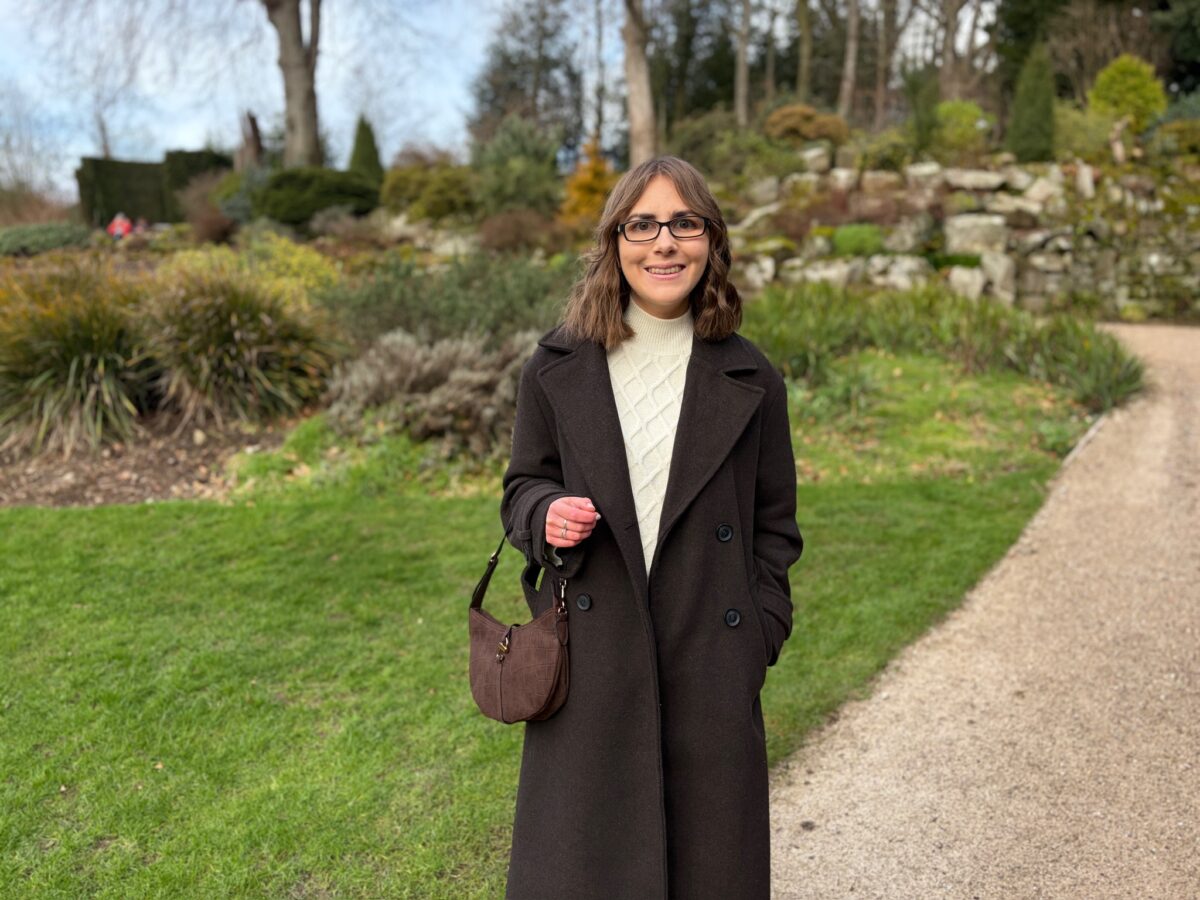
There’s a certain kind of loneliness that claims you when you’re in a room full of people but no one recognises your presence. The feeling veils your skin in a sticky substance that only access and equality can scrub away.
I’ve often come across people who believed inclusion happened because I was in the room, even as I sat there excluded. It’s not just in big gatherings or events; it’s in interactions where attitudes are configured by stereotypes, environments that overlook disabled people’s requirements, and token gestures of inclusion.
None of this has stopped me from showing up in society, but it does shape how I engage with the world.
Let me introduce you to the concept of presence vs participation, and why there’s such a stark difference between the two.
I’m going to take you back to last summer to begin with, to Wales 6-1 defeat to England at the Women’s Euros (yes, I’m forcing myself to relive the loss). Surprisingly, the thrashing wasn’t the most painful part of that match for me.
You might remember me noting in my recap of the experience that I was beside myself to be one small drop in the river of red that snaked its way through the Swiss city of St. Gallen, a Wales bucket hat a crown on my head. The anthem, the fan walk, and the buzz of the tournament formed a memory I’ll cherish forever, but as a disabled football fan, the game itself was unfortunately tainted due to inaccessibility.
With audio descriptive commentary only available in German (a total 180 on the multiple language options to choose from at the men’s tournament), and radio commentary lagging 30-60 seconds behind the action on the pitch, I was left to rely on the crowd’s cheers, sighs, and songs to tell the story of the match.
I was alert to the tell-tale signs of certain incidents in the action; the penalty shouts, the pause in the crowd’s breath just before a goal, the inevitable cheers from the opposition’s fans. But details about goal scorers, fouls, and near misses were things I had to learn about after the fact.
I was present as a fan, but I couldn’t participate as one in the same way because the accommodation I needed in order to do so wasn’t available to me.
Accessibility, or the lack thereof, is often the difference between simply being in a room and truly feeling included.
My experience at Wales international matches on home soil have been completely different, so too have been clashes I’ve attended at Wrexham’s Racecourse and Everton’s Hill Dickinson Stadium. Audio descriptive commentary was available at all games, and it helped me reimagine my sense of belonging in the crowd.
Unlike typical radio-style commentary which has soundtracked many matches I’ve attended, including my last visit to Goodison Park last year, audio description shares details of every move as it happens, omitting nothing as it explains things like players’ facial expressions and celebrations.
It can be the difference between:
‘Beto to Ndiaye, oh what a strike!’
versus
‘Beto flicks the ball over the top of the Chelsea defence, Ndiaye picks it up, he shifts past the last-man Caicedo with a quick touch. Now he’s at the edge of the area, takes a shot and the ball flies into the top right-hand corner! That’s the perfect postage stamp finish, bringing Hill Dickinson to its feet as Everton go three up.’ (Yes, I’m still riding the high of that win).
In one version, I’m a listener. In the other, I’m a witness. It’s descriptions like these that ensure I’m a part of the swell of the crowd’s reactions, not questioning what provoked them.
This divide between presence and participation isn’t exclusive to football though, of course.
I’m often confronted with barriers, assumptions, and a disregard to the world’s visualness.
Misconceptions and stereotypes have conspired to create a narrative that dismisses disabled people’s right to participate in society, which leads to exclusion.
One of my first memories of this is from my time in school. There would be the odd occasion teachers would forget to send work to my TA to be adapted into an accessible format which would see me twiddling my thumbs as the rest of the class continued with their task. Every passing minute without my work in front of me felt like a growing chasm between me and my fellow students and only served to magnify the feeling of being left behind. It was also a very painful experience for the workaholic in me.
Similar scenarios have popped up in adulthood as I wait for my requests for alternative formats to be met. The gap expands in so many other areas of life, too, and provokes a kind of detachment that’s hard to explain.
It happens at major events when accessibility isn’t up to scratch, in conversations where questions about me are directed to the person by my side or words are tinged with pity rather than respect, in group chats where photos are sent with no descriptions, and in situations where I have to ask for clarity when the joke is already old news for those who had instant access to it.
In every scenario, I’m present, but my ability to engage depends on the level of accessibility and inclusion society chooses to commit to in each moment.
When they aren’t prioritised, it creates a domino effect, triggering feelings of isolation and making it difficult to grasp a sense of belonging.
Disabled people are often sidelined, attitudes favour stereotypes over our voices and lived experience, and we constantly find ourselves asking to be included. As sad as it sounds, this means we expect exclusion as standard.
There always seems to be a waiting time when it comes to accessibility. It’s something that’s often retrofitted, but only when disabled people flag its absence.
We find ourselves suspended in limbo, waiting for our requests to be fulfilled, hovering at the edges of conversations, guessing our way through inaccessible websites, and calculating how much time there is before our connecting train leaves the station, crossing everything in hope that our pre-booked assistance will turn up before its departure.
There’s also the workarounds people try to prompt:
‘Isn’t there someone who can travel with you?’
‘Can you ask someone to help you complete the form?’
The subtext here is that my presence is only valid if someone is by my side, and my independence isn’t as valuable as their time.
It feels as though society has taken a bite of a chocolate bar coated in ableism and sprinkled with outdated perceptions, and the consequence is spaces blemished with inequality.
These spots scar when they’re not treated with care.
So what’s the tea-tree oil to shrink and diminish exclusion?
It all starts with recognition. It’s about acknowledging and respecting disabled people’s existence, honouring our access requirements, and inviting us into moments rather than pushing us to the periphery of them.
Inclusion doesn’t require grand gestures, it breathes in the small daily acts people choose to take, whether it’s taking an extra minute to add alt text to their social media posts, making sure they’re sending Word document alternatives to the PDF they’ve produced, asking questions about what will make an experience more accessible, or acknowledging that calling for change isn’t something that should rest solely on disabled people’s shoulders.
More than anything, it’s about recognising the importance of presence but being aware of the fact that that alone isn’t enough. Accessibility bridges the gap that homes those feelings of loneliness and isolation, and ensures that we can participate on equal terms, be part of conversations, and know exactly what we’re cheering (or sighing for) when that goal goes in.
What’s your take on this topic? I’d love to know if fellow disabled people can relate and what actions you think society can take to remedy this divide. I’ve parroted this so many times on here, but accessibility and inclusion are not luxuries, they’re the gateway to ensuring everyone belongs. The split between presence and participation creates an invisible barrier that separates us, and it shouldn’t be that way. It’s up to society to commit to dismantling it to ensure everyone can show up without having to worry about whether they’ll be let in or not.
Elin x
Share this:

Discover more from My Blurred World
Subscribe to get the latest posts sent to your email.
You May Also Like


The Comments
Matthew
I can relate. Accessibility needs to become the default. It’s hard to tell if things are getting better on that front, as it’s a big wide world and we’re only exposed to a little portion of it. That combined with ones inclination to gravitate towards accessible situations and avoid challenging environments, leads me to feel I’m luckier than most. That said, accessibility is far from perfect in my little corner of the world, so there’s definitely more to do. But I intend to keep showing up. Exposing as many people as I can to the need and more importantly the benefit of making situations/places/experiences accessible. Thanks for the post.
Holly
This really resonates. Accessibility needs, and must become the default. I love how this post highlights the difference it makes for us as disabled people – to us, it’s inclusion and not just a tick-box exercise xxx