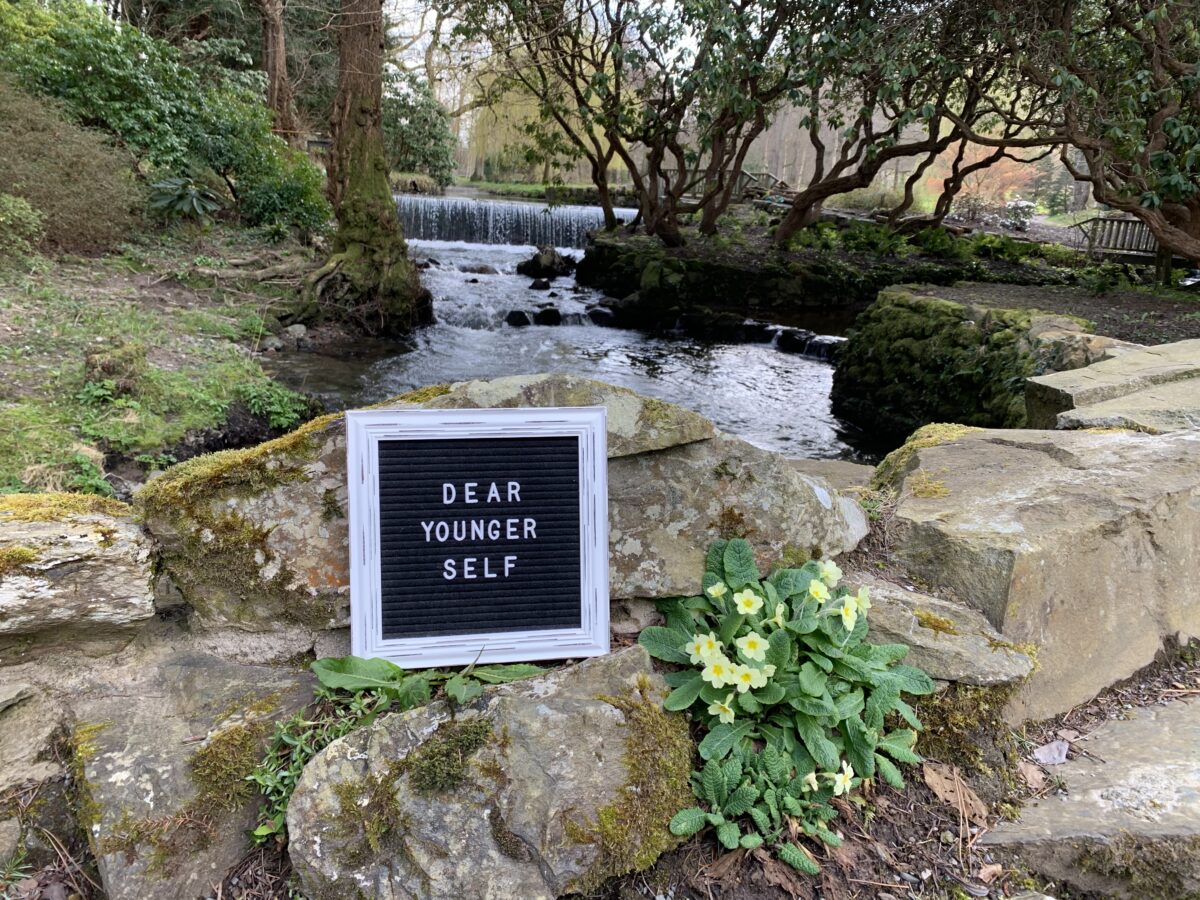
If there’s one piece of advice or some comforting words you could tell your younger self when it comes to dealing with your impairment/health condition, what would it be?
This is the question I posed to disabled people over on Twitter a few weeks ago and boy was I overwhelmed (in a good way) by the response.
A slew of replies took pride of place in my mentions and DM’s with people offering some words of wisdom to their younger selves.
I found myself nodding along to so many of them since they were words I could have benefited from hearing a few years ago too.

When I was growing up, advice from others in a similar situation to me was quite sparse. I first turned to the internet in search of some reassurance about a decade ago, but the pages weren’t as densely populated with personal blogs and articles as they are nowadays.
This magnified the feeling of loneliness and isolation, leading me to believe that I was alone in what I was experiencing.
Needless to say that wasn’t true, but my 12-year-old self wasn’t presented with that fact. It wasn’t until I started sharing my own story and tiptoed into the world of Twitter a few years later that I discovered this truth. Luckily for me, people welcomed me into their digital communities, enveloping me with their advice and reassurances. Those people were, and are still, wielding elements of their stories against discrimination and stereotypes, something that’s incredibly powerful to witness.
I’ve been able to learn a lot from fellow disabled people because of this, so I’ve come to know that they have a lot of valuable things to share.
Enter the inspiration for this post.
I’ve written to my younger self on here before, but I was intrigued to know what other disabled people would tell their younger selves if they had the opportunity. We might not be able to go back in time, but a blog post cataloguing that advice is as good as anything, right?
Essentially, I’m hoping this post can act as some kind of resource for others who are in search of some comfort, reassurance or advice right now.
We need advice that empowers and emboldens us, but we also need words that simply reassure or help us to ascertain the realisation that we’re not alone.
So who better to bring in to bestow all of the above than disabled people themselves?
Although I’d love to include every response in this post, it would make it a tad too long – even by my standards… But if you fancy perusing more replies, or if you’d like a little extra helping of wisdom beyond this piece, you can hop on over to this tweet.
The cocktail of emotions we’re served as we grow up is flavoured with confusion and uncertainty at times, but there is some sweetness in terms of lessons that will help guide us through. I hope you find some within this post.

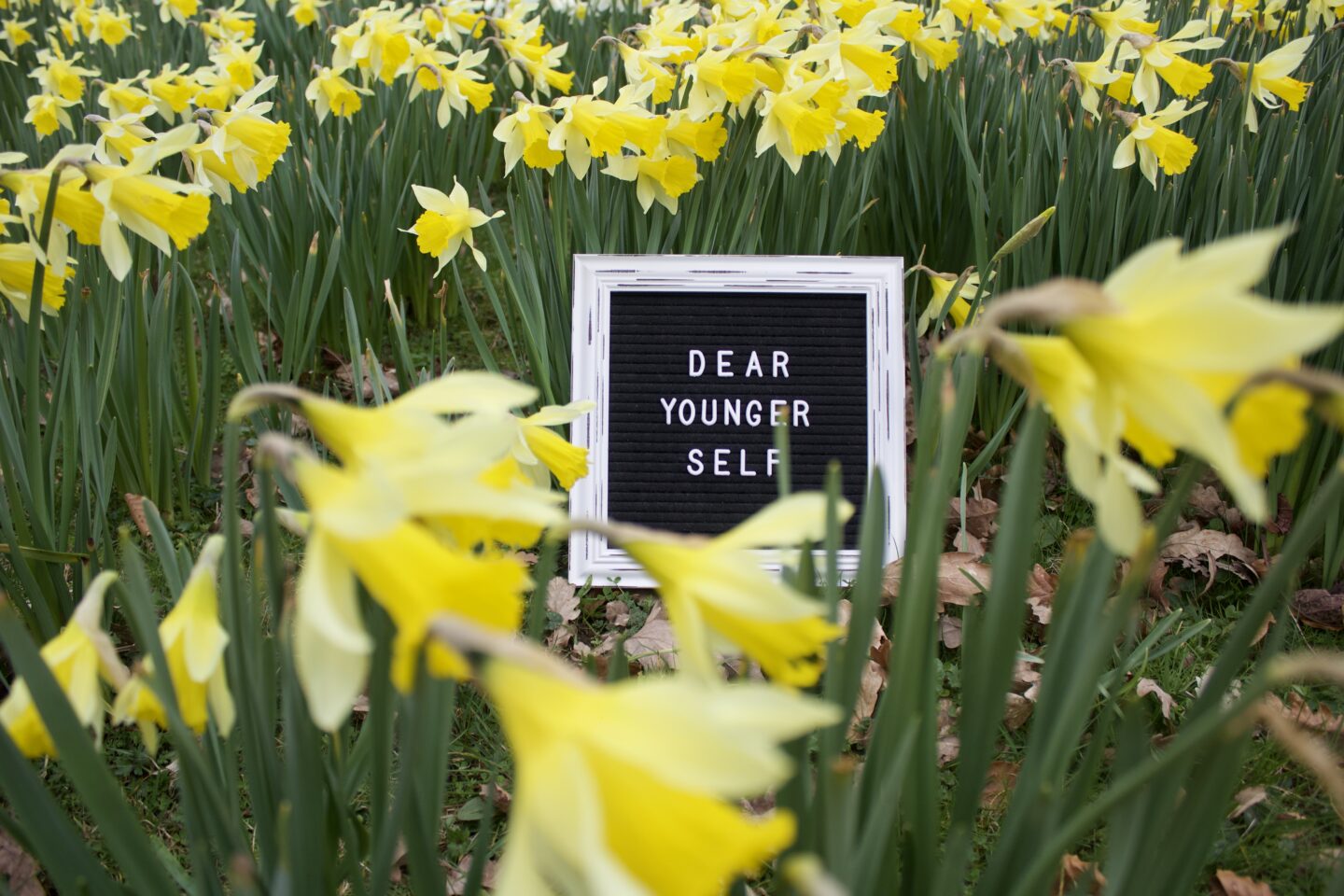
DEAR YOUNGER SELF:
Be kind and don’t compare, everyone’s journey takes a different amount of time
“Be kind to yourself. Life can be tough. However, sometimes, as one door closes another door opens, watch out for those opportunities and embrace them. It might not be the life you were expecting to have, but it doesn’t mean it can’t be good. You can still follow your dreams but maybe on a different path. I am not saying it is easy, as it is definitely not. Nevertheless, try not to compare yourself with your non-disabled peers and think of all the things you have not done or achieved. Instead, why not think of all the things that you have achieved? There are probably many you would not have achieved, if you hadn’t have been YOU, and had a disability or illness.” – Hannah
“I’ve got chronic fatigue due to cancer – I’d say to be patient, accept the bad days, and not always compare myself to other people without my condition.” – Rachel
“It’s okay to make progress at your own pace. Everyone has their individual strengths and weaknesses so try not to compare yourself to others because everyone is individual and makes progress with things at their own rate, disabled or not.” – Alice
“Don’t be too hard on yourself. Stop trying to keep up with everyone around you. The ones that love you just the way you are are never leaving and completely understand.” – Emma
“It’s about what you can do not what you can’t.” – Olivia
There’s strength in reaching out
“Don’t be afraid to ask for support, and to have the confidence to speak out when you don’t get the help you need, whether in education, work, or elsewhere.” – Caroline
“It is perfectly ok to accept help, you don’t have to prove you can do everything on your own.” – Fola
“It’s OK to ask for help/adjustments. If people don’t know, they can’t help.” – Stephen
“I would definitely tell my younger self to talk about how I feel and find peers to support you. You are not alone in this journey and to consider accepting that your sight loss is a part of you and not to fight it.” – Nina
“It’s OK to ask for help. It’s OK to not be like other people. It’s OK to be vulnerable. Your blindness does not define you. Your brown skin does not define you. At the end of the day, you will find friends and acquaintances who will value you.” – Mel
“I can be more than people expect, but I don’t have to be everything. I spent so much time trying to prove that I was good enough, I forgot how to let myself reach out. It’s ok to need people, to be vulnerable and sad and hurting sometimes. It’s ok to reach out to a friend. It doesn’t make you weak, it makes you human.” – Holly
TAKE THAT BREAK / REST. IT’S OKAY TO SAY NO
“If you need to rest, rest and don’t feel guilty about it. Listen to your body.” – Faith
“Saying no is ok, you don’t have to please everyone, just yourself. I realise this now after years of saying yes to people just to please them especially when it came to work. Also don’t listen to the bullies. You’re amazing, bright and will be successful in your own way.” – Esther
“Stop trying to keep up with everyone else. It’s ok to say no!” – Philippa
“Trust your body more and the opinions of others less.” – Dee
NEVER APOLOGISE
“Don’t apologise to people for asking for access adjustments that you need – it’s a right, not a suggestion!” – Jasper
“Don’t apologise for being you, find people who love and appreciate and value you for you. Find people who are patient enough to take the time to get to know you. Be a lot kinder to yourself.” – Rosie
DON’T TAKE NO FOR AN ANSWER
“Don’t take ‘no’ for an answer. If you want something badly enough and try hard enough, there will be a way of doing it, even if its not the conventional way. Imagination, inspiration and dedication will always win out.” – Poppy
“I would suggest that as well as having acceptance, don’t be afraid to speak out and challenge especially against prejudice and discrimination. Be the person you want to be, not the person society expects you to be!” – Ollie
“You have a lot to offer the world so don’t hold back.” – Laura
There’s light at the end of the tunnel
“Acceptance is key! It might be tough at times but there are so many positives, focusing on them can help you find the light. Be proud of who you are, love your differences and the things that set you apart from everyone else.” – Holly
“Don’t think that visual impairment is the end of the road for you or your goals. It might not be easy some days, but keep moving forwards. You may surprise yourself.” – Juan
“Find something you can smile about each day, and enjoy your life as much as possible.” – Macy
“It makes you who you are, it’s not a weakness, it’s a strength.” – Luke
“You’re unique and that’s awesome!” – Georgie
NEVER GIVE UP
“Adapting to your disability will be a rollercoaster. Some days you won’t have any control, but on the days that you do, savour it and enjoy it. Its OK to have a love/hate relationship with your disability. You will learn to be your own advocate and a strong one at that.” – Ami
“Only you know your strengths and capabilities. Don’t let non-disabled people dictate to you what you can and can’t achieve and what is and isn’t possible. You know yourself best so don’t let non-disabled people discourage you from trying if you think you can achieve a particular goal.” – Alice
“I’d tell myself you can achieve more with a disability because you are more determined to succeed and meet great friends on the journey!” – Laura
“The diagnosis that I lost most of my sight happened a few weeks before my 55th birthday nearly 4.5 years ago. I’d encourage my younger self to totally embrace my Wand Of Power (white cane) and my Magic Boxes (iPhone and iPad with their apps) for independence, ALSO find the blogs, and YouTube videos by those who have gone before.” – Lynne
“Try everything. Not all opportunities will work out but throw yourself into learning new things and you will find something that suits the new you.” – Sarah
“Keep moving, don’t give up, ski while you still can, take the cable car up the mountains when you can’t.” – Kristein
“Be true to yourself, understand what you can and can’t do and speak up for yourself. Nobody else knows you like you know yourself.” – A Blurred Muffle
“You can do whatever you put your mind to, no one can stop you.” – Amin
“The world wasn’t built for you, but it doesn’t mean that you can’t exist within it.” – Ashleigh
“You are disabled and disabled is not a bad word.” – Katy

ONE last THING
“Read about the social model of disability, follow it and be proud.” – Christiane
*
Wow, what a post.
Thank you so much to everyone who relayed their experiences, advice and reassurances, it’s been a delight to curate this post over the past couple of weeks. It feels like a true reflection of the comfort, empowerment and reassurance that lies in the disability community, it’s a joy to be able to capture a snapshot of it here.
It’s no secret that navigating life as a disabled person can be challenging, but as we decode the emotions, I think that it can present positive elements to savour.
For me, over time, it has allowed me to forge a commitment to be patient with myself, and to understand that it’s okay to feel the emotions, to venture down avenues of pain and sadness and to ask for help and support when you feel overwhelmed and need company on the journey.
Anxiety and grief have tinged my life with their charcoal features over the years, they still do. But through lessons and realisations such as some of the ones that have been shared here, I’ve been able to shred some of the darkness.
It can be tricky to pull the root of disdain from your mind sometimes, can’t it? But I do think that as that root becomes looser, it creates space for more positive seeds to blossom.
Over time, I’ve come to realise that my impairment and health condition are parts of who I am, but they’re not all that I am. Just like the Social Model of Disability says, I am not disabled by them, I’m disabled by the parts of society that refuse to accept the value of accessibility, equality, inclusion and rights.

So many people echoed the same sentiments when the replies to that initial tweet came flooding in, and it dawned on me that so many people have, or do, feel the same way.
There’s power in realising, and really noticing that.
Do you have advice or reassurances of your own to add to this list? Whilst everyone’s journey is different, whilst we all learn and realise things at different times, in different stages, and wield those truths against moments of uncertainty or hardships in contrasting means, I do think that there are shared experiences that bonds people. So, if you think you can serve up some helpful tips, or simply just a reassuring sentence or two, I’d love for you to add your own voice to this conversation. Let’s make some noise.
I could go on and on when it comes to the myriad of responses that came my way, but I hope this gave you a little flavour of reassurance or a nudge towards the realisation that you’re not alone.
Elin x
Share this:

Discover more from My Blurred World
Subscribe to get the latest posts sent to your email.
You May Also Like
The Comments
Lucy
This is such an amazing post and all the advice from different blogger’s is bang on! Some of these things I wish I told myself when I was younger growing up with a disability! x
Lucy | http://www.lucymary.co.uk
Elin
LucySo glad you liked the post, Lucy! Thank you for reading as always x
Holly
Such an amazing post with truly important advice. I could have definitely benefited from hearing a lot of this when I was younger! I’m sure this post will help many disabled people, and be a source of reassurance and comfort. Thank you for putting it together lovely xxx
Elin
HollyThank you so much for being a part of it lovely xxx
Khushi
I can see myself going back to read this again and again. thank you so much. I got a little teary while reading it, I don’t know the reason yet.
to everyone in the online disability and chronic illness community, thank you. thank you so much for writing, speaking and putting your experiences out there in the world. you don’t know how much you’ve helped me and taught me and still continue to do so.
thank you for curiting this post.
Elin
KhushiI’m so glad you found this helpful, Khushi. The community definitely has so many words of wisdom to offer. Thank you for reading as always 🙂
Kim
This is a brilliant insight, thank you.
diana
Great post, you did an amazing job! Everything shared here will be helpful to disabled people or even their friends.
A question. Where do you take the pictures from? You take them yourself or a site? They are beautifully described, too.
Terri
dianaI’m 59 years old and legally blind since birth. Your posts have taught me, thank you! One of the main things I would tell my younger self is don’t hide who you are! Don’t pretend you can see something when you can’t. Don’t allow others to treat you like you lack intelligence because you lack vision. Always remind yourself God created you the way you are and you don’t need to be embarrassed of yourself.
Children's Mental Health Week activity - a letter to your younger self - victastudents.org.uk
[…] DEAR YOUNGER SELF: ADVICE FROM DISABLED PEOPLE Read here > […]