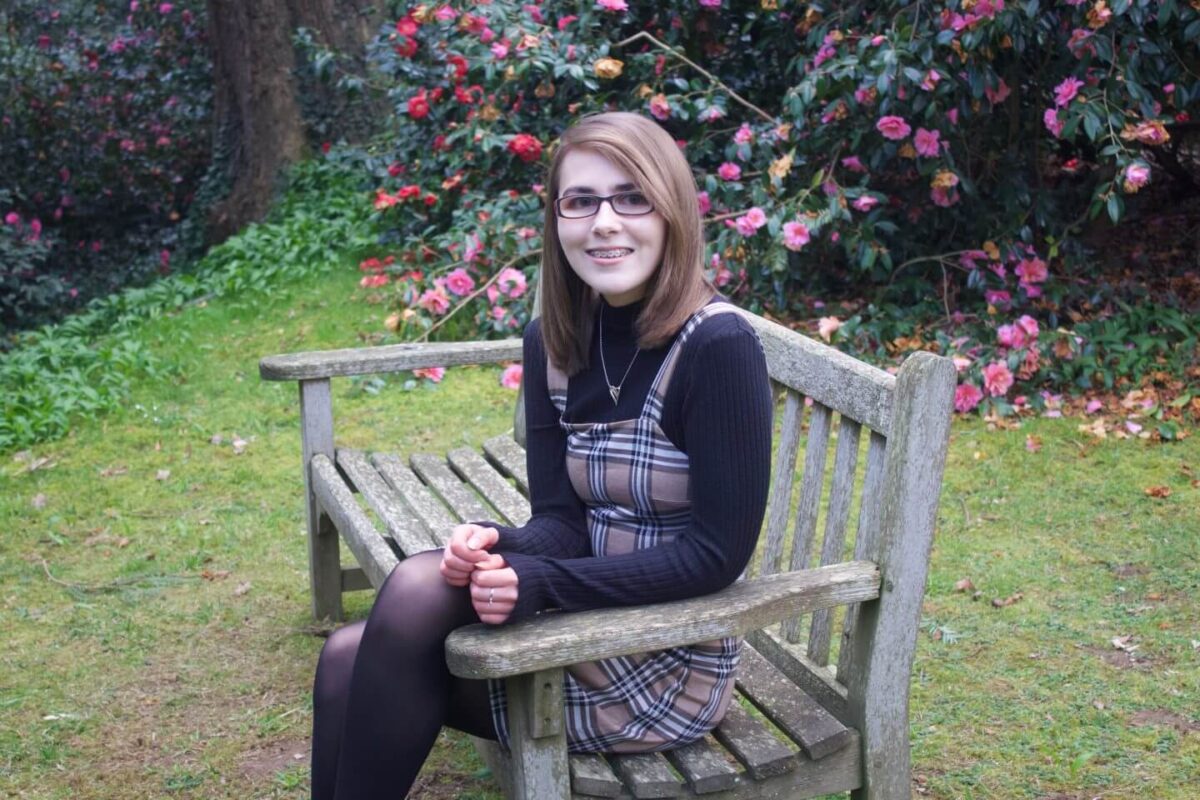
“You don’t look blind”, “You don’t look disabled”, “You don’t look ill…”
These are observations that leave many disabled/chronically ill people feeling confused, baffled, and as I’ve learned in the last week or so, sometimes even conflicted.
If you took my cane out of my hand and you weren’t a lucky witness to my many bumps, crashes and stumbles, you couldn’t tell that I’m blind (or so I’m told). Now put the cane back in my hand; my vision impairment suddenly becomes more noteworthy and yet people still question it. Either because of the nice outfit I’m wearing, the fact that I’m young or because I can navigate around a sign without crashing into it (that’s where the cane comes in handy).

I’m also chronically ill due to ME/CFS, but it’s something I don’t often disclose to people (that’s a topic for another day). However, one of the reasons I don’t often say anything about it is because of the worry that stems from knowing that some people hold the key to a whole chest of words that they can throw my way if I didn’t slot into their already completed painting of what a chronically ill person should look like. There doesn’t seem to be any way of erasing parts of the image.
And that thought is what provoked this blog post idea along with the knowledge that I’m not the only one who has experienced questioning and judgements regarding my impairments. The thought has been drumming in my mind for a couple of months now and I think – at long last – that I’ve finally found a way to set it in motion.
I’ve touched on this in one or two of my previous posts but since it’s something I still hear quite often, I think it’s about time that I dedicate a full word count to the topic.
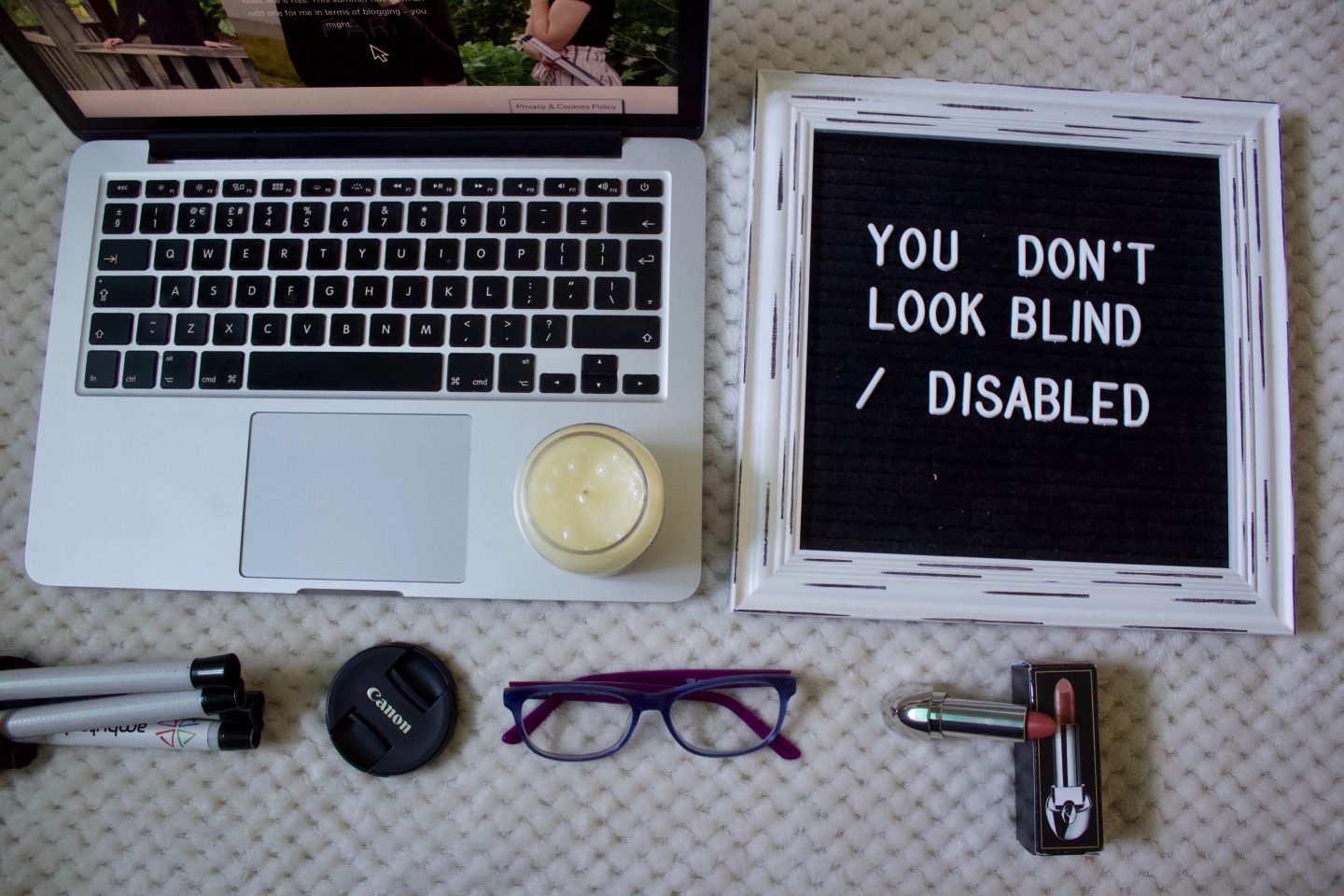
“YOU DON’T LOOK BLIND / DISABLED” – ADDRESSING THE STIGMA
There are some symptoms you simply don’t see but it doesn’t mean that they don’t exist.
So with this in mind, along with the fact that I’m merely just one small drop in the massive ocean of disabled people, I took to Twitter last week to enlist the help of those who can share their own experiences in this post and by doing so, we can hopefully create a bigger, more impactful, wave.
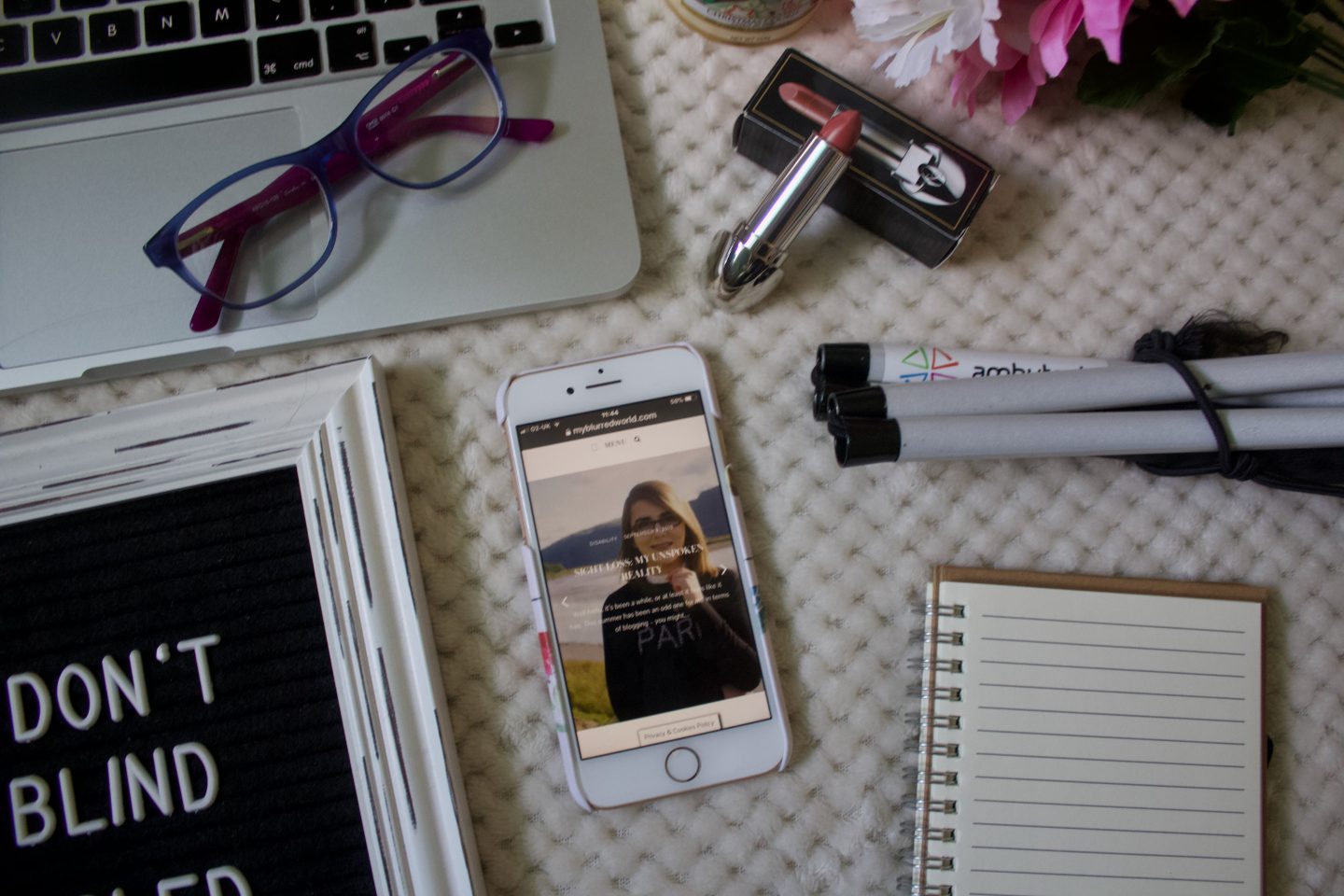
My phone rests beside me as I write this with Twitter notifications lighting up my screen, each ping indicating another response to the tweet I’ve just posted.
My pressing question was this; Has anyone ever told you that you ‘don’t look blind or disabled’? And as the tweet whooshed into the digital landscape, I sat hoping that I’d get a few replies to support my points in this post.
But I’m shocked, as more and more replies come flooding in, each person’s words bolsters information and experiences I had only ever heard of in discrete detail before.
This really does shine a light on the extent of the misconceptions that are out there and, as more wonderful people reach out, I’m realising the impact four little words can really have.
The tweet has opened a conversation that I didn’t anticipate, and the 100+ replies that graced my mentions and DM’s have been particularly eye-opening for me.
It’s become clear that there’s an air of confusion interwoven with the question of what people really deem as a ‘true image’ of a blind, disabled or chronically ill person. And it begs the question of what aesthetic traits satisfy non-disabled people’s curiosity?
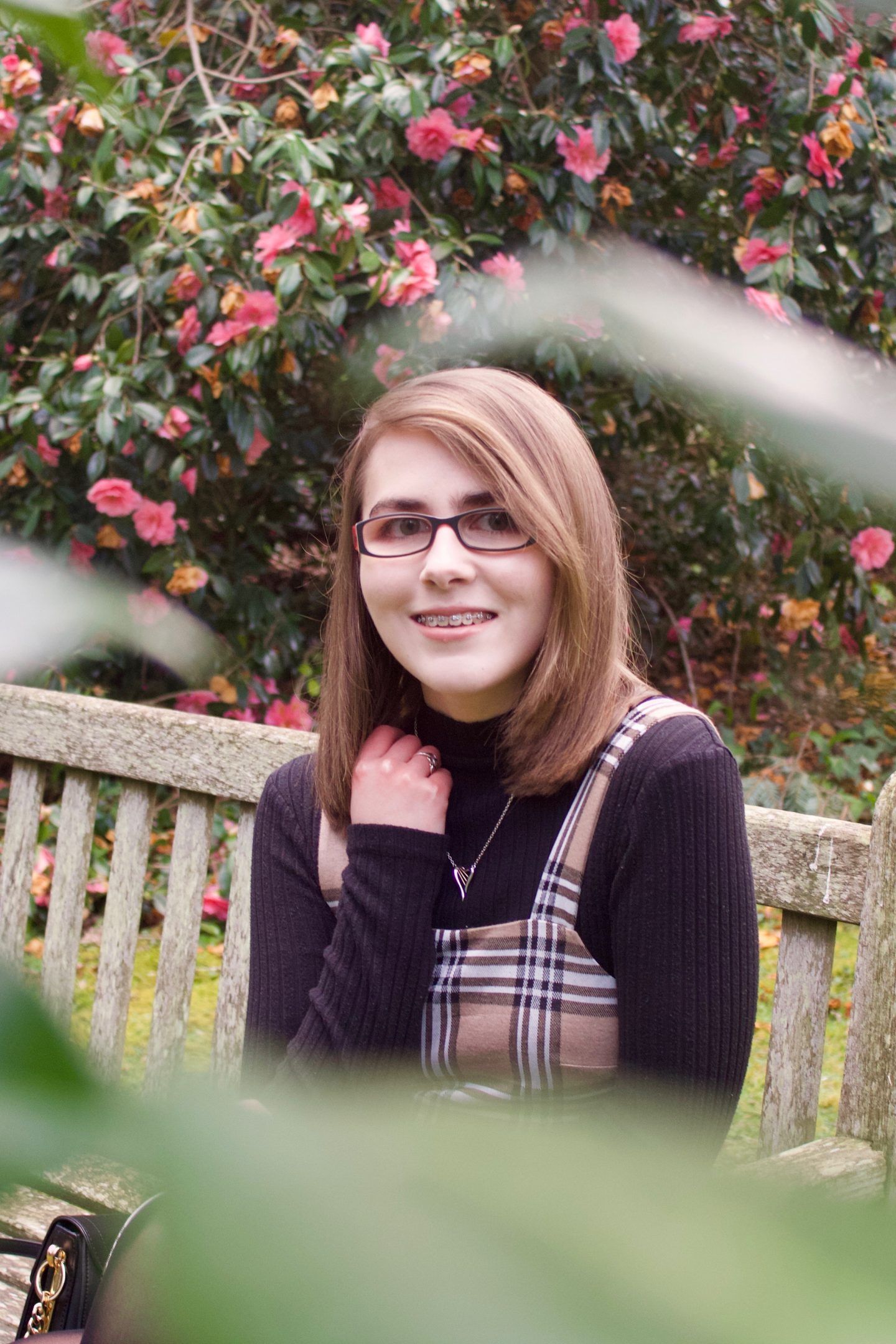

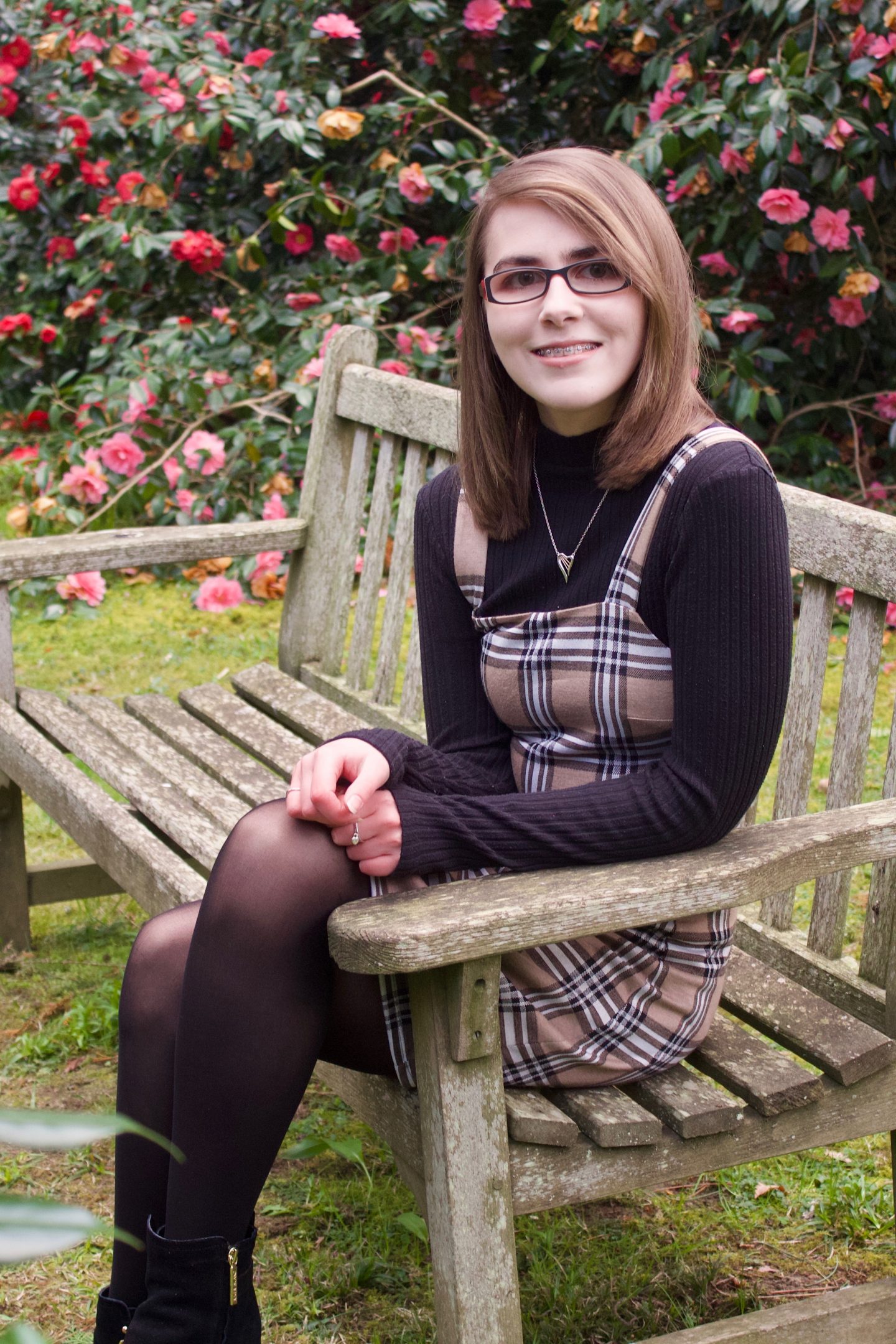
Like so many others in my situation, I’ve come across many judgments and questions: people stating that I don’t look blind or ill, others implying that I’m nervous or scared when holding on to my mum’s arm when she’s in fact guiding me, being asked ‘Are you blind or something?’ when I was using my cane during a mobility lesson, the list goes on.
I quite often dismiss such inquisitiveness because it’s sadly something I’ve got used to and so have many other disabled and chronically ill people.
But our voices deserve to be heard and that’s why I want to address the stigma in this post. What better way to do that than with the help of those who have experienced similar things?
Ever since I started my blog, I’ve vowed to raise awareness of the topics that often go unheard of and whilst today’s subject might not be the most important in the grand scheme of things, it’s clearly something that many can relate to and that’s why I’d like to open up a nuanced conversation about it.
Before we get into it, I just want to say that this post isn’t meant to cause offence or make anyone feel bad if they’ve said any of what is included. This is purely to raise awareness and to hopefully encourage a slightly more open-minded approach.
So here we go (you might like to grab yourself a cup of tea or a snack before you carry on reading because this is a long one – but please do keep the page open because there are a lot of important experiences in the depths of the upcoming words).

THE STEREOTYPICAL IMAGE OF A BLIND PERSON
We’ll start off with the oh so famous stereotype of a blind person, something that was at the crux of the matter for many.
“I’ve been told that I don’t look blind on a number of occasions and I never really know how to take it, is it a compliment? Is it a surprise? It sometimes leaves me feeling rather awkward because I never know how to feel and don’t really know what to say. I think people assume that I don’t look blind because I have an interest in beauty and fashion so take pride in the way I look, I wear make-up and try to make myself look nice and presentable. Just because I’m blind, it doesn’t mean that I can’t have a sense of style. Disabled people are often seen as having very little confidence, relying on others and not being independent so when we’re the opposite of these things, non-disabled people can be shocked. However these are outdated stereotypes. I like to present myself in a good way and I will always make an effort with my appearance and I know so many other disabled people that do exactly the same. Our disability doesn’t have to define the way we look and we shouldn’t be conformed to look a certain way. It is important for non-disabled people to have an open mind and not make assumptions about the way we look.” – Holly
“I often get accused of not having a visual impairment. I use a long cane, but do have some sight left. Also, because I have had all my sight for the vast majority of my life, I believe I still know social prompts which makes me seem as if I have more sight. It is frustrating, and draining, to always be proving your disability.” – Chloe
“As I walk confidently along familiar routes on my college campus, people often stop to ask if I am “really blind”. When I tell them I am really totally blind, they typically respond with something along the lines of, “Oh wow! You really don’t look blind at all!” My favourite reply to this statement is, “What, exactly, are blind people supposed to look like?” This usually results in several seconds of stuttering and apologies before they say something like, “You’re just dressed really well for someone who can’t see anything,” or, “Your hair looks super nice for someone who can’t look in a mirror,” or, “You were just walking super fast like you knew where you were going”. Part of me actually enjoys hearing things like this because it is verification that I do look as confident and put together as I hope I do, and part of me finds it irritating that they feel the need to stop me on the way to class because I don’t fit their stereotypical view of blind people. I usually take this as an opportunity to educate them on how blind people do things and let them know that the media’s portrayal of blindness is usually very far from reality.” – Cheyenne
“I’m often told that I don’t look blind, both by strangers but also by people in my life who are still getting used to me using my white cane. People sometimes think they are paying me a compliment when they say “oh I would never have known you were blind!” My visual impairment does mean that my eyes look ‘lazy’ sometimes and they often move around rapidly but I still have no idea what people think ‘blind’ is supposed to look like! I often wear sunglasses, even indoors, because I’m very sensitive to the light. Honestly I think this helps people accept that I am ‘blind’ because wearing sunglasses is a stereotype. It’s so horrible when someone confronts you about not looking blind, or faking your blindness because you’re reading your phone or have noticed something visual like a sudden movement. People can become so aggressive and it has given me a panic attack before. A man once told me about a set of steps, I knew they were there because they are on a route I travel every day, also there is tactile paving before the steps to indicate where they start. I said “I know thanks” and he screamed abuse at me for faking my blindness.” – Amy
“The first time I heard the phrase you don’t look blind, I was pretty stunned and shocked by it. Because then, I did not realise some people think that blind people should look a certain way, in order for them to actually be blind. My reaction was to say nothing, but in my head thinking, what does that even mean? After that, i had various other similar experiences. With half my year at school thinking I was faking because my eyes looked normal… I suppose that through time I began to realise that people had misconceptions about how blind people look. And I wish that they knew that you don’t have to look a certain way to be blind or disabled, and also, there doesn’t have to be a visible sign of it. We can do everything that those who are not blind or disabled can do, just in a different way.” – Zenaib
As a visually impaired and chronically ill young adult, I’ve been told by people (both strangers and people I know) that I don’t look blind/disabled or sick, and I’ve even been told that it’s a compliment. But, in my opinion, I think it’s quite offensive to be honest. After all, there is no one way to look blind or sick. Many illnesses cannot be seen by the naked eye. But people just look at the surface and assume. Also, because for the most part, whenever I’m out and about, I like to present myself as a confident and an independent young adult, and I usually go out on my good days, so most people won’t even see me on my bad or worse days because those would be the days that I hide at home, curled up in bed. What I wish people to understand (and I try to educate them the best I can) is to look past what’s on the outside and don’t judge just based on what you see. Because there’s so much more to a person than what you see.” – Xin (Carol)
5 years ago I lost my sight to a freak accident from lack of oxygen, which lead to my optic nerves dying in both eyes. Due to the nature of my sight loss, my eyes adjust to light and look relatively okay, considering. One comment I get on an almost daily basis when I explain I can’t see is “but you don’t really look blind, like your eyes look normal.” Not only is this truly frustrating, but beyond offensive. Just because I follow your voice and you think I’m looking you directly in the eye? I’m not, I physically can’t see you, never mind your eyes. Unfortunately, I think there’s such a stigma about being blind that people automatically expect you to stroll up, completely hopeless wearing black sunglasses and a guide dog. I just wish it was being taught in school about all different levels of sight loss and not to treat us any different or like outcasts.” – Laura
Worse thing was being told “I don’t look blind” and followed by, after explaining I have less than 20pc vision, “well you are not blind enough!” It made me want to understand why people felt they could be so casual about my own experience. It made me feel like I did not fit into what the ‘presumed’ notion of what was deemed “blind”. Did I have to have a cane, a dog or dark glasses? And if I didn’t – was I a fraud? It put a huge burden on me internally – and added to what was already difficult – adjusting to sight loss. It did make me curious- where did the myth of the blind person come from? I think it comes from an unconscious bias – the presumption disability is separate from the rest of the world.” – Selina
“Are you wearing contact lenses?’ is one i get a lot. It’s usually more because of how my eyes look. People think I’m wearing those costume contact lenses you get at Halloween. They always look suitably embarrassed when I explain that I’m VI.” – Carys
“I have uveitis and glaucoma but often if I mention it, people will peer at my eyes and say “they look ok”. I have some of the country’s top doctors looking after me, using precise high tech medical equipment, but some people seem to think they know more just by looking at my eyes! Glaucoma in particular is quite a hidden eye condition, not everyone wears dark glasses and your eyes don’t appear any different, so I think people find it hard to understand.” – Lucy
I think this is what it comes down to at the end of the day – lack of understanding. And of course we can’t expect people to be familiar with the concept of sight loss if it’s not something they’ve ever come across before. But, as so many have said, it doesn’t make hearing such blunt accusations any less frustrating.
It seems that if we don’t wear dark sunglasses, if we have a sprinkling of eyeshadow on our eyes or if a smile dances on our lips, people wonder what is actually ‘wrong’. Surely someone who is happy or wears makeup can’t be blind? I feel like here is as good a part of the post as any to do some self-promo so let me refer you to this post which is all about beauty without a mirror, and this piece where I explained why I care about fashion as a blind person.
We live in an ever-changing world with something new to help us being released constantly and because of that, vision impaired people are able to lead a more independent lifestyle. I really hope this realisation becomes less shocking one day.
ACCUSATIONS OF FAKING
As you’ve already read, some people have been accused of faking their impairment and, for me, this is what’s most disheartening of all.
The fact that you can’t see someone’s symptoms doesn’t make them any less valid.
“I get told a lot “but you don’t look like you have autism” as though autism is always something you can see, when it truly isn’t.” – Jasmine
When I became visually impaired, I was told that i can’t be because I wore glasses.” – Ami
“I’ve had “you look normal, as if you can stand up out of that wheelchair. Why don’t you try?” and “you’re not like other disabled people as your personality shines past it.” I guess the latter implies disabled people don’t have personalities.” – Fi
So many people fight relentlessly to get the support and the aids they deserve and it can take a lot of courage for some to make their way into public. So being accused of faking a condition can be incredibly hurtful.
Meg replied saying that she hears “You don’t look disabled” constantly, she explained:
“To the point of being confronted in public by strangers, being accused of stealing my disability badge or being too young so I must be faking just to get benefits. Whenin fact I’m a police officer and my disability was a result of being injured at work.”
And she wasn’t the only one who faced hurtful accusations:
“Once, when getting on a bus I went to use my bus pass, being registered blind I can use my pass anytime, the bus driver questioned it, I said ‘I’m registered blind’ and he told me I wasn’t and that I was lying to get a free bus ride.” – Lucy
And these accusations aren’t just made in person, similar claims were made on online dating sites. Erin said; “I have had someone on Tinder tell me my pictures were deceiving because I don’t look disabled in them….” A similar answer cropped up from Lil who said that she has been called a “fake, attention seeking, a liar, a fraud, a disgrace etc” on dates and dating apps.
Others cited that they’ve been told that they’re ‘too pretty to be disabled’ and even ‘too young’. Have those eyebrows raised yet?
“I am blind in my right eye due to having glaucoma and I’ve been told by many people including doctors that I’m too young to have that condition as it’s usually the older generation that are affected. I think the reason people say this kind of thing is due to a combination of stereotypes in the media and also their lack of knowledge. I also wear a prosthetic eye, just for cosmetic reasons, and so people seen to forget that I have a disability because there are no physical signs which just shows that people are a lot more sympathetic when they can physically see a difference. They shouldn’t have to be able to see something to know it’s there, this is true for mental illnesses/chronic illnesses too. I am currently studying special needs and disabilities at university because it’s something that is important to me and I want to make a difference and be the voice to others in the future.” – Chloe
DISABLED PARKING
Disabled parking and blue badges have been a hot topic lately and it raises concerns for many.
I have a blue badge which gives me the right to park in a disabled bay but I’m sometimes skeptical to do so since the only visual attribute to my impairment is my cane and, if I don’t have it to hand, I fear the wrath of other’s judgements. This often means that I tell my mum to park in another spot because I don’t want to take the last coveted space. However, there are days i need that space when my legs can only carry me so far, but it doesn’t take the worry away.
Parking in a disabled parking space with an invisible disability is a nightmare sometimes. I got constant looks, like people are analysing me to see what’s wrong with me. It’s so frustrating that I can’t explain to them what’s actually wrong with me. But why should I?! People are so quick to judge and just think you’re abusing the system, which is completely untrue! I’ve had people have a go at me in public, it’s so belittling and humiliating, I just want to hide away and park in a normal space just so I don’t get any attention. But sometimes my breathing can be laboured because of my illness so I need to park closer to the store. I wish people wouldn’t judge so soon.” – Lucy
QUESTIONING OF MOBILITY AIDS
Many stated that using a mobility aid still seemed to invite questions from complete strangers, causing them to feel belittled and wondering what proof the healthy population need in order to feel satisfied with someone’s impairment/health condition.
Despite a lifetime of health issues that affect my ability to complete day-to-day tasks, I just recently started identifying as ‘disabled’. I had previously been hesitant to do so because I never felt like I was “sick” enough and I still feel that way sometimes. My disabilities are not visible which has often led to odd looks from strangers while using assistive devices as if they’re questioning whether I actually need them. Instances like these paired with people verbally questioning my disabilities, leads me to feel like I either need to act “sicker” so I can fall into their limited definition of what a disabled person is or go the other way completely and go without assistive devices or accommodations and suffer just to avoid the questions and the looks. I wish more people understood the complexity of disabilities and the many different ways they present themselves; I honestly believe the majority of people are good and it comes down to whether or not they’ve been educated on the subject. But I also believe it’s not up to disabled people to teach them.” – Kait
I really did feel saddened by Kait’s words because they reflect the true impacts misconceptions can have.
Others also noted that they were crippled by fear that they would be met with a tirade of judgements when using their mobility aids in public and, because of this, they chose not to use them. I’ve felt this way before too and it’s one of the main reasons I chose not to use my cane for such a long time.

Being called out for not ‘looking blind’ was one of the things I feared most about using a cane. I hated the idea of a stranger accusing me of being a fraud, of someone confronting me, shouting at me, grabbing me — what I feared, essentially, was aggression, and that fear stopped me from using a cane for a very long time. I began using a cane full-time a few months ago, and while aggressive behaviour is still something I worry about, my fears have been far outweighed by the kindness and consideration that strangers show towards me.” – Joe
Others cited disillusionment as they thought their mobility aids would be enough to erase any questioning about whether they were disabled or not but it only seemed to encourage further judgements in some situations.
Wheelchair user, Rebecca, was asked “Is that thing for real?” when she was sat in her chair and Mik was asked “Is your chair a fashion thing?” – Some people’s assumptions really do baffle me.
My eyes widened even more when I read a couple of replies which stated that some were told they don’t SOUND blind or deaf… I have no words.
Lastly:
Before I had a cane I would have discrete ways of proving myself to people that needed to know. Now I have to prove my disability to everyone in public. My very visible disability now means that the way I look and act challenges their perception of disabled people which is both a blessing and a curse. I have been challenged and talked down to but if that is the price I have to pay to be more comfortable getting around so be it. To be told that you don’t look or act disabled is to be told that you don’t limit yourself to the imagination of others. We may not look disabled but this is what disabled looks like.” – Rohan
I thought I’d end with this one because Rohan makes a great point when saying ‘this is what disabled looks like’ (I feel like a teacher marking an essay when saying that) but it’s true – disability is diverse, individual and unique, just like the rest of the world.
We’re so often reminded that we’re all different and that’s the beauty of this world – disability shouldn’t be cast aside from that beauty. It should be recognised as a spectrum, there are so many different impairments, health conditions, symptoms and with that comes a lot of different coping mechanisms, mobility aids and appearances.
There’s no specific look or a certain tone of voice, it’s a glorious image, splashed with contrasting colours, each with its own meaning.
If you take anything from this post, I want you to remember those colours because that’s what disability is, something vibrant – no one should be painted with the same brush. The next time you come across a disabled or chronically ill person who sparks your curiosity, please do try to adopt an open mind because there’s no one look that represents us all.
I think it’s about time that the stereotypical black and white image is replaced with a much brighter picture that’s a symbol of diversity, don’t you?
I could write so much more on the myriad of responses I received and there are so many I wish I could have included here, maybe that’s a good excuse for a part two? Let me know if that’s something you’d be interested in reading. I definitely think it’s important to encourage this conversation further and if blogging about it is the way to do that then I’ll happily write some more.
I’m sure we’d all like to give people an insight into our unseen symptoms, if only there was a way, but for now I hope that by talking openly about our experiences, that the non-disabled public’s awareness starts to increase slightly.
Many said that it seems that if misery, pain and suffering isn’t etched on your expression, some people are inclined to doubt your condition. I can only hope that one day this won’t be the case and that those of us who are disabled or chronically ill can navigate the world with confidence, to wear makeup and fashionable clothing without being told we don’t look blind or disabled enough and to smile and laugh without being accused of faking or being too happy or positive to possibly be disabled. We deserve that much at least?
Thank you so much to everyone who was kind enough to share their experiences with me. I was absolutely blown away by how many responses I received and it truly highlights the extent of the matter. None of us ever want to be greeted with the things contributors to this post have heard and that’s why I think it’s important to start this conversation. It’s upsetting to learn that so many people are questioned about their impairment or health condition and even worse when they’re accused of faking them. It’s a true reflection of the misconceptions and stereotypes that are out there and I can only hope that writing things like this encourage the non-disabled population to keep an open-mind when disability and chronic illness is concerned because it’s most definitely not a one-size-fits-all scenario.
We shouldn’t have to see impairments and symptoms to know that they’re there and I really hope this post helps to highlight that. Simply erasing a fragment of the image you have of a disabled person could take you one step closer to being more mindful of their experiences. Stating that someone ‘doesn’t look’ a certain way can lead to a lot of anxiety and doubts and that’s something no one deserves to feel.
If you’ve ever had similar experiences to the ones mentioned throughout this post then please feel free to share them. So much prejudice surrounds different impairments, chronic illnesses and health conditions, and, whilst it might never be removed completely, I’d love to hear any thoughts you have on the topic and what you think is the best way forward.
Elin x
Share this:

Discover more from My Blurred World
Subscribe to get the latest posts sent to your email.
You May Also Like


The Comments
Lucy
Thank you for allowing me to take part in this post Elin, I absolutely loved other’s opinions and experiences with living with a disability. This is such an inspirational post and I hope this can reach across to so many other people, not just people with (invisible) disabilities, but to others who have chosen to belittle us for not looking disabled xx
Lucy | http://www.lucymary.co.uk
Elin
LucyThank you so much for being a part of the post Lucy, it was so lovely to have you involved!xx
Jane Carter
This is a brilliant post Elin and it’s something we at the Wilberforce Trust are very conscious of. We are currently working with a young VI woman, Jade, to hold talks in schools about “what is blindness” and how she has dealt with it herself as I think education is the key. Most people just don’t understand any form of disability and feel scared of it or embarassed about it. Your article sums this up perfectly. Thanks so much for what you do
Elin
Jane CarterThank you so much Jane. It’s great to hear that you’re working with Jade to hold talks in schools, I think that’s so important and invaluable in terms of educating young people. I think it’s definitely a great way forward. Thank you so much for reading as always.
Liv
Fantastic post Elin!
I suffer the ignorance of people too as I have Cystic Fibrosis, another largely invisible disability. Just the other day I had some guy come up to me and question why I was parked in a disabled space in a car park.
I felt disgusted I had to justify my disability to a busy-body nobody!
Liv x
http://www.seabreezecorner.com
Elin
LivThank you so much Liv! Oh my goodness that’s awful and unfortunately not uncommon. It’s not right at all that you had to justify yourself like that, I wish people weren’t so quick to judge! Thank you for reading xx
Khushi
thank you so much for this post, Elin. some of those comments were really startling!
thank you so much xx
Elin
KhushiWeren’t they just! Thank you so much for reading as always Khushi xx
Robin Dunford
Another very thoughtful and interesting blog about something that regularly happens to so many VI people. It is down to a lack of understanding from many of the public, who just need to be more informed, and blogs like this will certainly help regarding this.
Elin
Robin DunfordThank you Robin. I completely agree, that’s why I wanted to include as many thoughts as I could in this post, to highlight the extent of how often this happens and what affect it can have on people. Thank you for reading as always.
Simon Bishop
Some really startling comments on this topic. The worst look I had was turning up to a disabled space looking happy with my music playing. What really got me was that the same person continued to stare as I struggled out of the car and attempted to stand (knackered spine) only when I had shuffled a few steps were they “happy” enough to carry on with their day… mustn’t be seen to be having fun… But it is the constant explaining and questioning and justifying that tires yourself mentally, I sometimes feel I should have a handy little sheet I can give to people with my life story for them to read. But the questions from people who should know better and with my disability being spinal, it’s a choice between a detailed explanation of medical history or the curse of someone thinking it’s just a bad back, then when they find out you get a War Pension… I’ve even been asked “Why do you get a War Pension? You’re not in the military?”… Err OK… But it’s not everyone, an elderly gentleman offered me a hand down a kerb once as I was finding it a bit high, fortunately we could both see the funny side of the situation, and the wry smile from a very old lady as she overtook me on her Zimmer frame several years ago during a particularly bad issue with my spine did make me chuckle. Keep strong.
Elin
Simon BishopIt’s awful that people seem to need ‘evidence’ of someone’s disability and symptoms to be satisfied enough with them parking in a disabled bay. I completely agree with you when it comes to how tiring it can be to constantly explain the ins and outs of your condition, if only people were less curious. Thank you so much for reading.
Mollie Quirk
I’ve been following your blog for years and this post is BRILLIANT. You are so amazing and the work you are doing to raise awareness for this topic is simply wonderful. Keep being you, keep being incredible!! Lots of love from Mollie, blogger at theperksofmolliequirk.blogspot.com xxxx
Elin
Mollie QuirkOh my goodness this is so sweet, thank you so much Mollie! Your support means the world xxx
Ami
Thank you so much for including me! Wow, I’m astounded at how many people have experienced similar comments. This is a fantastic post Elin and I hope that after reading this, people will understand that being blind doesn’t have a ‘look’.
Elin
AmiThank you so much for getting involved Ami, it was lovely to have you as part of this! It’s absolutely crazy to think about how often this happens to people. Hopefully by talking about it, we can raise more awareness. Thank you for reading as always lovely xx
Holly
Thank you so much for giving me the chance to get involved in this post lovely. Well done for raising awareness and tackling the stereotypes, I really hope this post reaches as many people as possible because it is such an important topic xxx
Elin
HollyThank you so much for being a part of it lovely, it was fab to have your input. It’s crazy to think about how often this happens to people so I hope more awareness can be raised by talking about it xxx
kyle cogan
I was once told years ago that I don’t need to tell people i’m blind as people can already see that i’m carrying my cane. Toddlers and young children should be allowed to ask about blindness without parents or carers having to spirit them away for what they perceive as their child being rude by asking questions.
Elin
kyle coganI completely agree, the best way of learning is by asking and I think the more questions asked by children, the better, because that’s the way they learn about disability and the important part it can play in someone’s life.