
‘Why do you care about fashion if you’re vision impaired?’ The question landed in my DMs a few years ago now (you might remember the blog post I naturally penned in response at the time). It’s a curiosity born of stereotype, one that lingers on people’s lips and floats around my head in quizzical speech bubbles.
How do you know if an outfit looks okay?
How do you shop for clothes?
Do you dress yourself?
Growing up, I was well-versed in challenging stereotypes but I never imagined my love of clothes would be something I’d have to justify. While other women answered questions about where their dress was from, I found myself explaining how and why I was wearing it at all.
And that’s the issue here. Fashion is widely considered as something inherently visual, living in pictures, mirrors, and on catwalks. So what does style look like when it’s stitched together through touch, movement, and memory?
Let me talk you through my relationship with fashion as a vision impaired person, and how it’s allowed me to style my own sense of identity over the years.
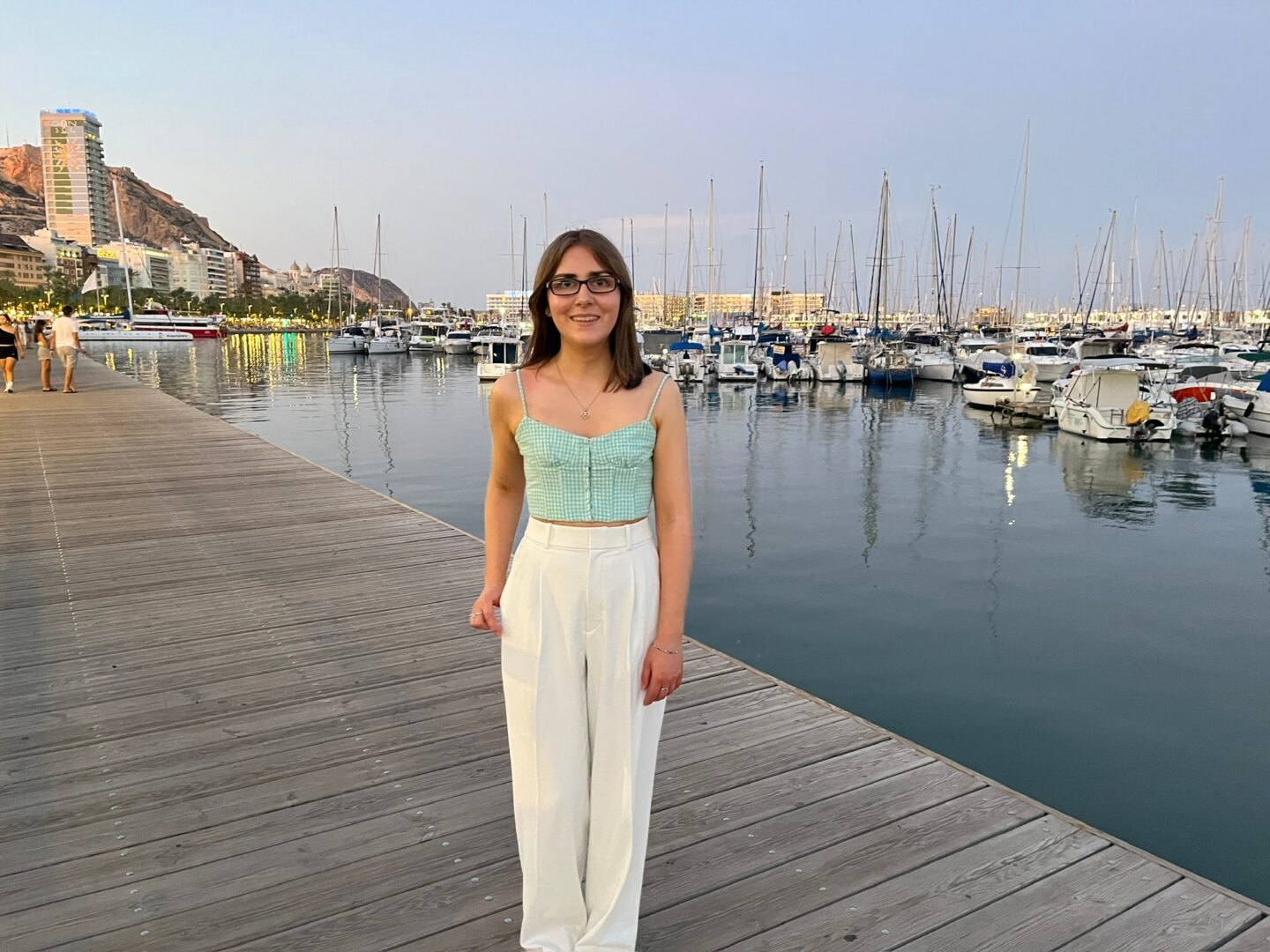
To me, fashion is all about fabrics, texture, and how an item or outfit makes me feel. Details like lace and embroidery become a language, allowing me to imagine and understand a piece without asking a mirror for permission.
My interest in fashion stemmed from hours spent watching styling videos on YouTube as a teenager, a pastime that sparked a desire to ditch my plain hoodies and jeans in favour of shopping for a new identity through the clothes I wore. Though I’ll admit I never parted with those pieces, they simply became my go-to dog walking clothes (it’s a good job I haven’t grown since I was about fifteen).
Since then, my style has evolved dramatically, but the basic rules in my wardrobe remain the same, grounded in my requirements for material and fit.
Clothes serve as both armour and statement for me. Whether it’s a cozy knit insulating me from the cold edges of ableism or a tailored blazer that empowers me to claim space in a world that often doesn’t make room for disabled people, fashion is about more than appearance, it’s about presence.
I don’t always feel visible, and I don’t always get to see myself as others do, but when I slip into something with the right texture or the perfect silhouette, it gives me confidence.

There’s a quiet disbelief that lives at the intersection of vision impairment and beauty, as though the two should cancel each other out. If there’s no mirror or no visual representation, the logic seems to go, then there should be no style, but that belief underestimates what fashion truly is.
It’s an ever-present misconception that feels like an irritating tag stitched into a top, dismissing vision impaired people’s desires and interests when it comes to fashion and identity.
I want to take a pair of scissors to that stereotype by sharing my experience.
In a society that so often defines beauty by vision, I have to create my own rules and standards. Fashion, to me, isn’t frivolous vanity. It’s an act of self-love and a way to show up in the world on my own terms.
When it works for me, it’s grounding but when it doesn’t, it’s alienating, and all too often, the industry chooses the latter by default.
Vision impaired people have long been relegated to the sidelines of fashion, either entirely overlooked or forced to make do with second-hand accessibility.
When I tell people I love putting effort into what I wear, I’m often met with the same aforementioned questions, and sometimes the unspoken subtext is: Why bother? As if my love for clothes should be explained away, as if there’s something inherently wrong with experiencing style differently.
There’s no expectation for vision impaired people to show up in the fashion world and this absence taints our sense of belonging, presenting countless barriers to our ability to engage and participate within it.
I’m talking websites with no ALT text image descriptions, unlabelled buttons, ads that distract screen-readers, poor colour contrast, complicated layouts in shops, poor or harsh lighting, the list could go on.
When it comes to accessing fashion, we are often expected to adapt and find workarounds. I turn to family or friends for descriptions and clarity, or I screenshot product images and run them through the Be My AI feature in the Be My Eyes app, which translates visual information into words and allows space for follow-up questions. But this process is time-consuming and still doesn’t remedy the larger issue: even after all that effort, I may not be able to check out an item because the system itself is inaccessible.
There’s a lot of guesswork involved in forging your style identity when the spaces you want to enter don’t account for you. It’s ironic that an industry built on imagination struggles to imagine disabled people within it, don’t you think?
But things are slowly changing.
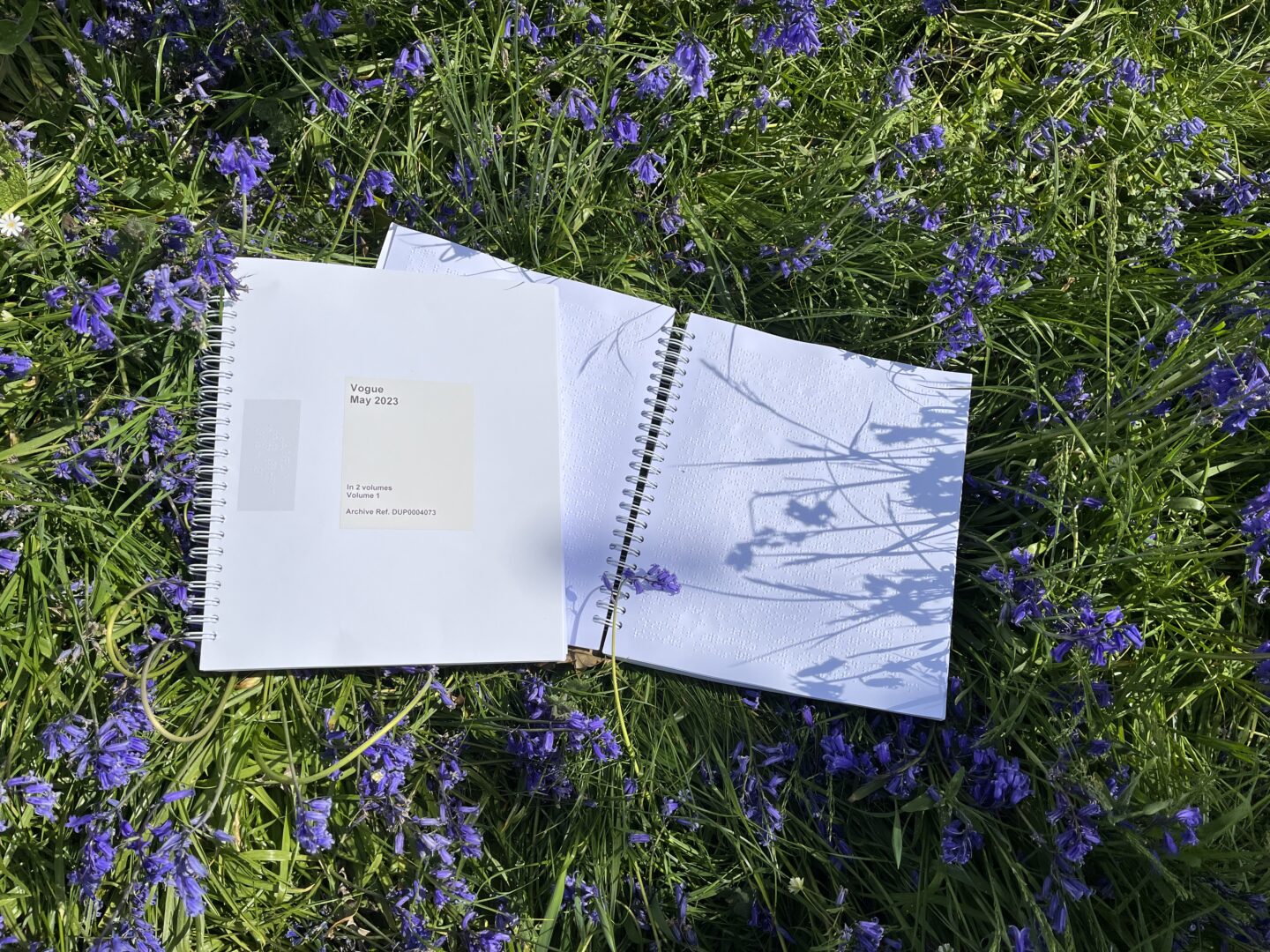
Vogue committing to releasing braille and audio editions of the magazine matters because it acknowledges that vision impaired people are readers, participants, and consumers of culture.
Initiatives like Hair & Care’s Making Fashion Accessible is also making waves, achieving landmark moments like the first vision impaired model to walk the catwalk at Copenhagen Fashion Week, and creating accessible fashion shows through audio description and tactile exhibits.
These moments signal progress and show what’s possible when inclusion is treated as creative opportunity rather than inconvenience, but we need more than moments, we need systems.
We need brands to recognise vision impaired people as an audience, not an afterthought. We don’t want to hover at the edges, improvising access, we want to be invited in. We want detailed alt text on websites and social media, we want audio described fashion shows as standard rather than novelty, we want campaigns that don’t assume sight as the only entry point to style.
Discovering accessibility in fashion often feels like finding a steal in the sales that’s actually your size; it’s rare, but it’s coveted. The assumption that I can’t interact with this world should be based on the barriers within it not my level of eyesight.
Vision impaired and disabled people shouldn’t have to constantly adapt to engage with the world around us, but we do. In some ways, that’s bolstered my love of fashion because I’m constantly seeking new ways to appreciate it, but the industry has a lot of work to do to shed all its layers of stereotypes and inaccessibility.

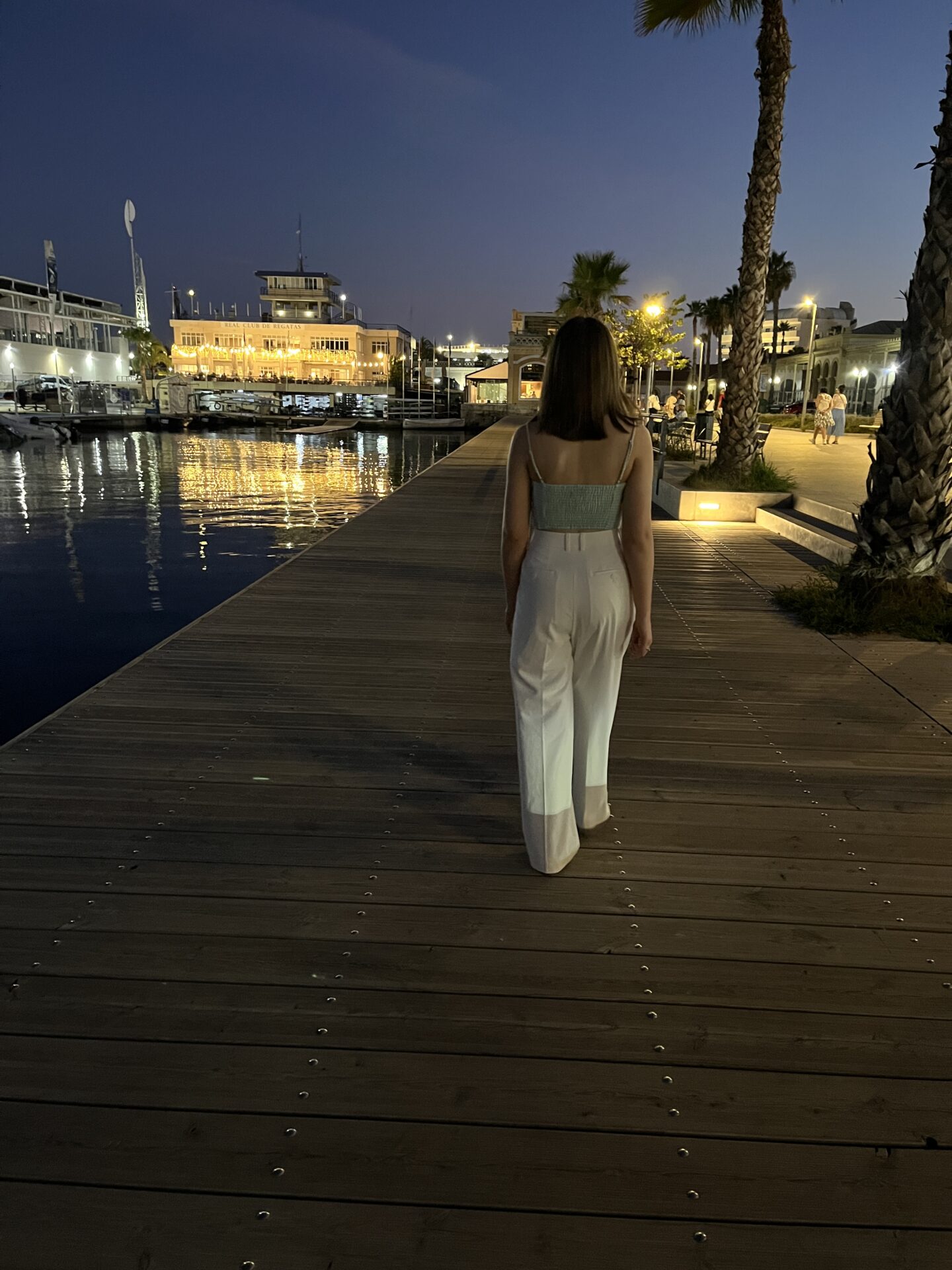
But let’s pivot back to what fashion means for me and my identity.
It’s about autonomy, confidence, creativity, and expression, something that allows me to see myself when representation is scarce and the world reflects stereotypes instead of possibility. It’s about resisting the idea that disability must equal dullness, neutrality, or invisibility.
But let’s not be coy about the fact that it’s also simply enjoyment; the thrill of putting an outfit together, experimenting with trends, and building a wardrobe that feels purposeful (even if the doors don’t close, oops).
Fashion, at its best, gives us language when words fall short. It gives us confidence when certainty wavers. It gives us a sense of belonging in a world that doesn’t always make room. And sometimes, it’s simply about feeling good within ourselves.
There’s a flip side to this too, of course. I won’t romanticise the pressure that can come with the visual aspect of styling, or the times I get it wrong.
There are times I stand still in my room, hands resting on the fabric, trying to conjure confidence from memory, with questions spinning in my mind like yarn being twisted.
Did I match the right tones?
Is this dress sitting how I think it is?
Did I pick the black skirt instead of the burgundy one I accidentally went out in thinking it was the black one before?
There’s not always a way to independently confirm that the image I hold in my mind has made it into the physical world, so I have to rely on the knowledge I’ve cultivated from years of sensing fashion through weight, feel, rustle, and drape.
It isn’t always perfect, but then again, perfection was never the goal.
Stereotypes have assigned a certain script to disabled people which often reads as “brave” if we manage to brush our hair and leave the house, draped in plain fleeces and lowered expectations. Sometimes I put on my favourite outfit to disrupt that narrative, not just to unravel misconceptions, but to sew a different expectation into the fabric of fashion, one that accounts for vision impaired people and questions what style is truly about.
At its core, fashion gives me something that many systems and strangers have tried to take away: control.
When you’re vision impaired, so much of life can feel dictated by the expectations of others. Decisions are often made about you rather than with you, about what’s safe, what’s possible, what’s manageable. But in my wardrobe, I make the rules. I get to choose softness or structure, whimsy or polish, depending on nothing more than mood or weather.
It’s in that act of choosing that I find a kind of belonging, not necessarily in fashion’s glossy mainstream, but in the quiet confidence that comes from dressing in a way that reflects how I feel, or how I’d like to feel, knowing I don’t need sight to embody style.
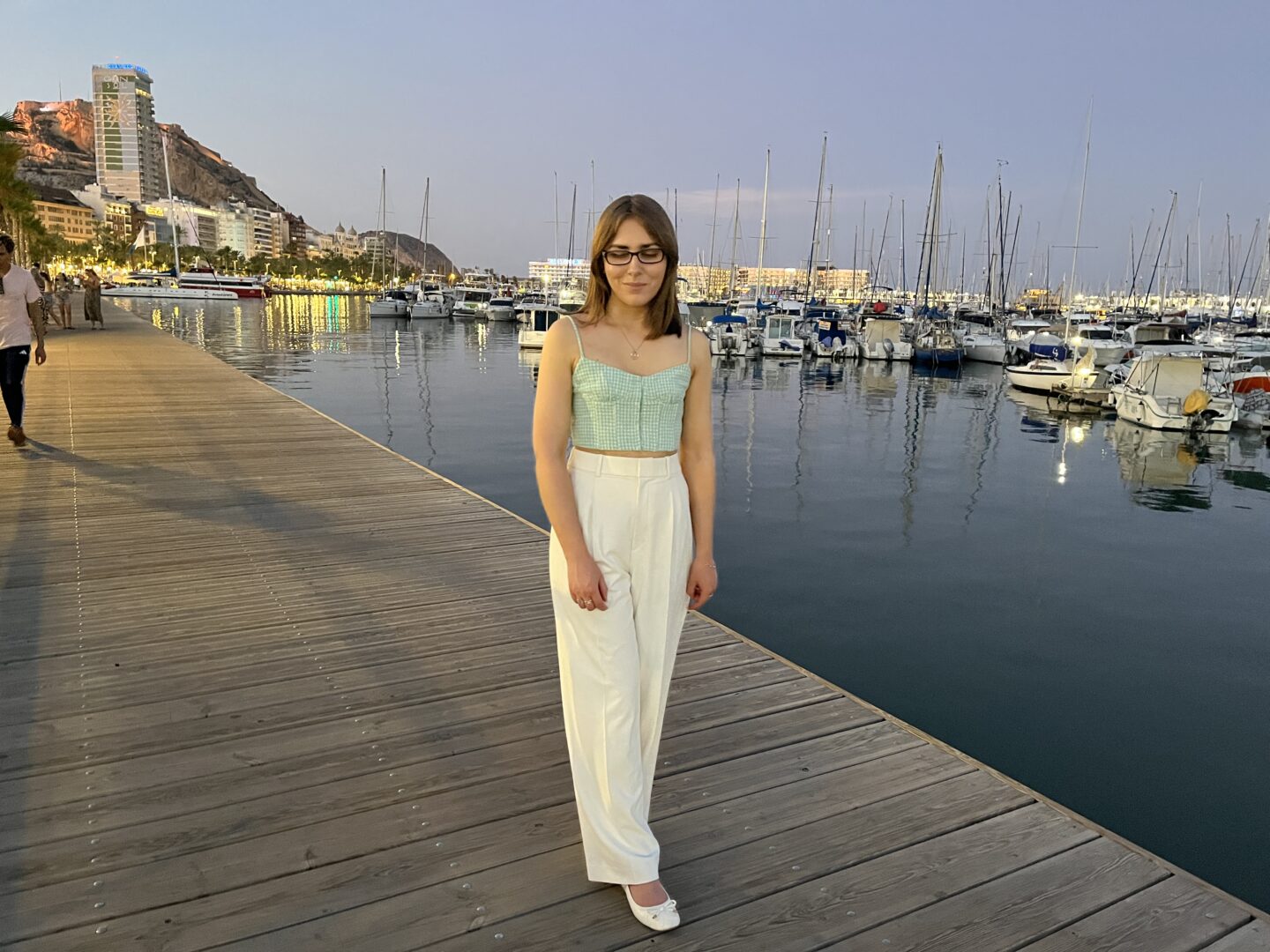
I don’t dress for the mirror, I dress for the version of myself I want to honour. And yes, sometimes I dress for the people who assume I wouldn’t, or couldn’t, not to satisfy their gaze but to meet it and, just for a moment, to undo it.
Belonging, in the end, is not about conformity. It’s about showing up as you are, even when the world doesn’t expect you to, and for me, that begins with what I wear.
Is fashion something that helps you express your identity too? Or is there something else that shapes your sense of belonging? I’d love to hear your experiences and your take on accessibility in the mainstream. I know so many people who use fashion as a bold outlet to preserve presence and send a message that says, ‘I belong here’, and perhaps that’s the most stylish thing of all.
Elin x
Share this:

Discover more from My Blurred World
Subscribe to get the latest posts sent to your email.
You May Also Like


The Comments
Patsy
Thank you Elin for helping people to understand better and to appreciate how you are thinking, so their comments may be less crass.
Elin
PatsyThank you for reading, as always, Patsy.
Holly
It’s so important we have these conversations and tackle such misconceptions about our love of beauty and fashion as vision impaired people. I was nodding along throughout. Brilliant piece as always xxx
Elin
Holly100%, we deserve a space in those conversations. Hopefully, the more we talk about it, the more barriers will be removed. Thank you for reading as always xxx