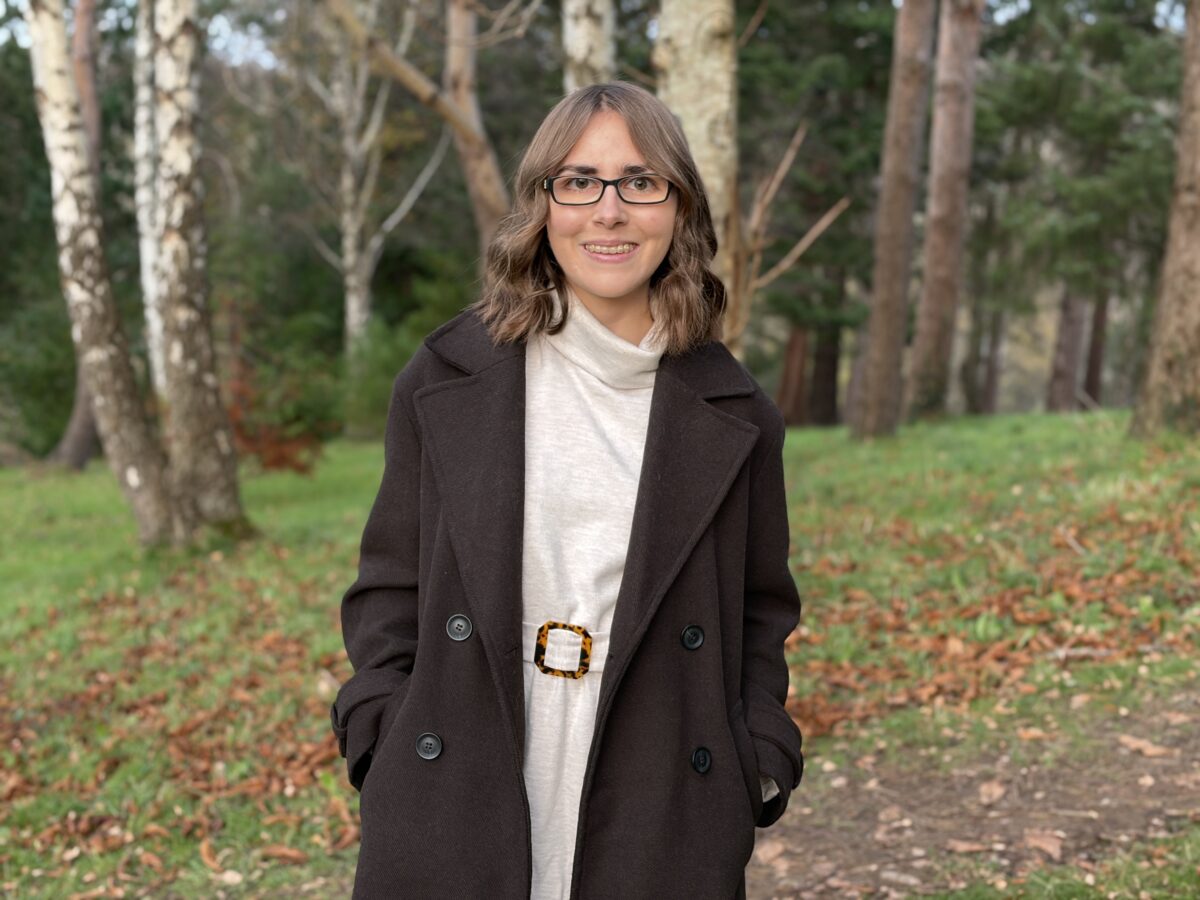
We all have little habits that settle so deeply into our lives that we stop noticing them. They weave so tightly into the fabric of who we are that they’re practically invisible, like deep grooves carved into our personalities. Some are harmless: a quirk that makes your friends laugh, or something that drives your family a little mad. But then, there are those other tendencies, the ones that hold weight. The ones that, quietly but surely, pull you down, tucking you into spaces of guilt, self-doubt, or overexertion.
As a disabled person, I’ve noticed that many of the habits I’ve formed over the years haven’t always been the healthiest. They were born out of necessity, fear, or the feeling of needing to fit into a world that wasn’t designed for me. And, if I’m being honest, some of these patterns have followed me for so long that I never really questioned them.
But we all know how introspective I can get, so it was inevitable that there would come a time to dig up the roots of these tendencies of mine.
Maybe it’s a sign that my frontal lobe has finally fully developed, but I’ve been identifying aspects of my life where unhealthy routines have taken hold, particularly in relation to my experience as a disabled person, and I’ve been actively working to unlearn them.
It would be rude of me not to share these thoughts on my blog, so here are a few of the habits I’m working to leave behind, and the lessons I’m learning along the way.
Not asking for support
Growing up, I often found myself neglecting my access requirements out of fear that it would inconvenience others.
It becomes incredibly easy to cast what’s really important aside when you’re constantly chasing this desire to ‘fit in’, and I grew so intent on ensuring I wasn’t disrupting other people’s lives that I didn’t realise how much I was damaging my own.
From keeping quiet about needing alternative formats, to stubbornly navigating spaces alone when I really could have benefited from having a sighted guide, these sacrifices quietly twisted and shaped the way I moved through the world.
Refusing to nurture my needs in this way definitely takes the cake as one of my unhealthiest habits, and whilst a part of me always knew how damaging operating in this way was, I didn’t truly reckon with that fact until a few years ago.
With that realisation came the affirmation that I’m doing myself a disservice by favouring what I believed were people’s priorities instead of my own voice. And so I’m unlearning the habit of shrinking my needs to make others comfortable, and learning to honour them without hesitation.
Apologising for requesting adjustments or support
When I finally began to ask for adjustments or support, I found myself apologising for them, as if my requests were this major imposition on society when, in fact, they were simple accommodations that we have a right to as disabled people in order to feel some semblance of equality and inclusion.
I wrote in my post about guilt a few years ago that this habit of apologising is implicit with being a people pleaser. It’s damage control, as if issuing the word will diffuse any lament or huff of resignation before it ignites.
I’ve lost count of how many times I’ve found myself apologising for asking for the most basic support. I used to think that my requests for alternative formats weren’t complete if I didn’t throw in a quick ‘Sorry for any trouble’, and it became an automatic reflex to tack this kind of apology onto any similar call for access.
It’s internalised ableism’s fault, really. We’re conditioned to believe that accessibility is a burden on society, so when we ask for it, we feel the need to apologise for taking up space. I’d even find myself calculating the exact level of effort someone might need to exert to assist me or. implement an adjustment, just to decide whether it was ‘worth” asking for’.
But over time, I’ve come to realise that it’s not my fault that the world isn’t built for me. The issue isn’t my requests, it’s the inaccessibility that’s all around us.
So now, I’m unlearning the habit of apologising for things that are out of my control, and reminding myself that my needs are not negotiable nor are they up for debate. I have the right to access, the right to be seen, and the right to take up space.
‘I don’t owe anyone an apology for needing the same opportunities as others’ has become my mantra, one I repeat every time I feel that old urge creeping back in.
It’s working. I’m slowly replacing the habit with the confidence to ask for what I need, and doing so unapologetically.
Straining my remaining eyesight
Living with a deteriorating eye condition is a peculiar thing.
Practically, it’s unnerving, sometimes even a little awkward, as I find myself adapting and seeking new ways to become comfortable with something that is so often uncomfortable.
Deterioration isn’t always obvious until you’re suddenly sat in front of a laptop screen, upping the magnification level, switching to a screen-reader, or pausing before moving around the kitchen, listening for the tell-tale signs of your family’s whereabouts: the clink of glasses in the sink, the soft shuffle of feet, the sizzle of an egg being flipped, these sounds summoning information my eyes can’t.
I’ve always been open to adapting to this loss and the changes in my access requirements, but there have been times when, while extending my arms to feel the space around me, I was also reaching out to hold onto what was fading away.
Enter the habit of straining the eyesight I had left, often because I thought I needed to make the most of it while it remained.
This was especially true during my time in school. I’d continue to scrawl my work in thick black ink that would pool into unrecognisable shapes whenever I tried to read it back. The pages looked scorched to me, but it was my eyes that burned as I willed the letters to stay in focus.
It took many stubborn, futile attempts before I realised how difficult I was making things for myself.
All the times I told myself I could still do it, push a little harder, endure a little longer, only served to deepen the discomfort of the loss.
So now I reach for the right tools, and I’m learning not to measure how much I can do by how much I can see.
Ignoring my feelings
On the topic of loss.
If there’s one thing I’ve learned over the years, it’s that grief comes in waves, some gentle, some crushing.
I’ve often found myself trying to resist the tide by shrugging off the sadness that comes with sight loss, burying it under a pile of ‘I’m fine’ and ‘It’s no big deal.’
But, in reality, I need to find the space to admit to myself that sometimes it is a big deal. Slowly losing your view of the world and dealing with all the barriers that come with navigating society as a disabled person can be a devastating and traumatic experience, and I need to stop pretending otherwise.
I’ve written about grief before; the feeling of mourning that presents itself in the quiet spaces when I realise that something I could once see, albeit a blurred figment, is no longer there.
Sometimes it’s easier to look the other way and hope the feeling will pass. But then again, grief is neither patient nor accommodating, and once it decides to occupy your mind, it won’t wait for your convenience.
I’ve so often tried to deny it from commanding more space, insisting that I have too much to do without taking the time to acknowledge this unwelcome inhabitant. But I’ve also realised that ignoring the loss in this way can also do more harm than good.
It’s uncomfortable, this feeling. But I’m learning to let it exist, to hold it for a moment before I move on. There’s no shame in feeling loss, no shame in allowing myself to be human.
Unlearning the need to be ‘strong’ all the time has been a lesson in embracing vulnerability. Grief isn’t an enemy; it’s a part of the process, and I’m recognising how to move through it without fear of drowning.
Staying silent when I’m struggling
It’s one thing to acknowledge and manage my own feelings, but communicating them to someone else is another matter entirely.
I’ve spent years staying silent when I’m struggling. Whether it’s trying to convert an inaccessible PDF into Word myself to save troubling the document’s author, or feeling overwhelmed in a crowded space, I’ve often held back from voicing any difficulty I might be experiencing.
It’s as if I’m trying to prove I can cope, to show I’m ‘capable’ and ‘independent’.
Projecting these traits has almost become a performance, and since I’m a perfectionist, stepping into the world without delivering the best feels almost impossible.
But in reality, silence only builds the pressure inside and refusing to breathe out these truths only makes things worse.
So I’m working on breaking the habit of staying quiet when I need help. I keep reminding myself that our thoughts, feelings, and requirements deserve attention. Sometimes we need to talk something through or ask for support with a task, and I’m learning to voice those requirements more often.
It’s a work in progress, but one I’m committed to.
Overcompensating
There’s nothing quite like pushing yourself too far, is there?
It’s a personality trait for me at this point, and not a very forgiving one.
In a world that expects you to ‘keep up,’ it’s easy to get caught in the trap of overcompensation.
I’m sure my previous points have given it away, but I’ve spent too much time overextending myself, doing everything I can to appear ‘capable’, as though doing so would somehow make me fit in better or validate my place in the world.
Whether it’s pushing myself through days that drain every ounce of energy, quelling my emotions in an anxiety-inducing environment, saying ‘yes’ to opportunities I don’t have the capacity for, or declaring that things are good when I’m actually facing a big bout of deterioration, I’ve often overcompensated to keep up appearances, all at the cost of my physical and mental health.
Yet again, this is all at the hands of ableism. Who’s surprised?
Disabled people find ourselves working twice as hard to reach the same opportunities as non-disabled people. We feel as though we have to prove our worth in a world that tells us we don’t belong, and fight to make space for ourselves when barriers block the way.
All of this often translates to overcompensating because internalised ableism has always demanded it: Push a little harder. Speak a little louder.
Looking back, I realise how much time and energy I’ve spent doing exactly that. It’s a habit I’ve been actively trying to shake for years now.
But I’m getting there. I’m sitting here today feeling better equipped to say ‘no’ when I need to, learning to take breaks without guilt, and practicing the art of pacing myself.
There’s power in setting boundaries, and I’ve learned that my worth isn’t determined by how much I can do or carry, but by how well I care for myself along the way.
I don’t know when exactly these habits started, or when they became so ingrained that I didn’t even question them anymore. But what I do know is that unlearning them isn’t a quick fix. It’s a process, a slow, deliberate shedding of old beliefs, like exfoliating the impurities from your skin.
I’ll hold my hands up and admit that some days I’ll slip back into old ways. I’ll feel the urge to overcompensate or ignore the quiet ache of loss. But each time, I catch myself a little sooner.
I am allowed to need support. I am allowed to ask for adjustments. I am allowed to take up space.
And preaching that reminder, my friends, is the habit I’m learning to embrace.
I’d love to know if you recognise any of these habits in yourself, or if there are others you’re working on unlearning. I’ve found that breaking away from these ingrained patterns can be difficult, but it’s also freeing to reach a point where you feel strong enough to let go, no matter how long it takes. Society tells us that we must act a certain way in order to be accepted, but none of that is worth it if it comes at the expense of our own well-being or self-respect.
So, I’m here in solidarity with anyone else who’s on this journey.
We’re in this together.
Elin x
Share this:

Discover more from My Blurred World
Subscribe to get the latest posts sent to your email.
You May Also Like



The Comments
Holly
So proud of you for sharing these. I can most definitely relate to every single one, and there’s lots I’m trying to unlearn as well.
Appreciate your openness here as always xxx