
July is Disability Pride Month. If you didn’t know that, I’m not surprised, especially considering the fact I wasn’t aware of it myself until last year. Come to think of it, I’ve spent the majority of my life up to this point completely oblivious to the awareness days and months that are dedicated to celebrating disabled people and to marking things such as the disabled people’s movement. I’ve seen a few posts this month echoing the same worry that these occasions aren’t given the mainstream attention they deserve.
Having leaned into my geeky research tendencies, I now know that Disability Pride Month has in fact been a thing for over thirty years. Its inception came as a result of the passing of the Americans with Disabilities Act (ADA) in July 1990 and is said to be an opportunity to amplify disabled people’s voices. Initially celebrated in cities and states across the US, Disability Pride Month has in turn extended across the pond to the UK to be claimed and highlighted by disabled people here too.
I wouldn’t know any of this have it not been for Google and the countless social media posts that have populated my timeline for the past few weeks. I’ve delighted in seeing so many people taking to sharing their stories and experiences, and offering empowerment and solidarity to fellow disabled people.
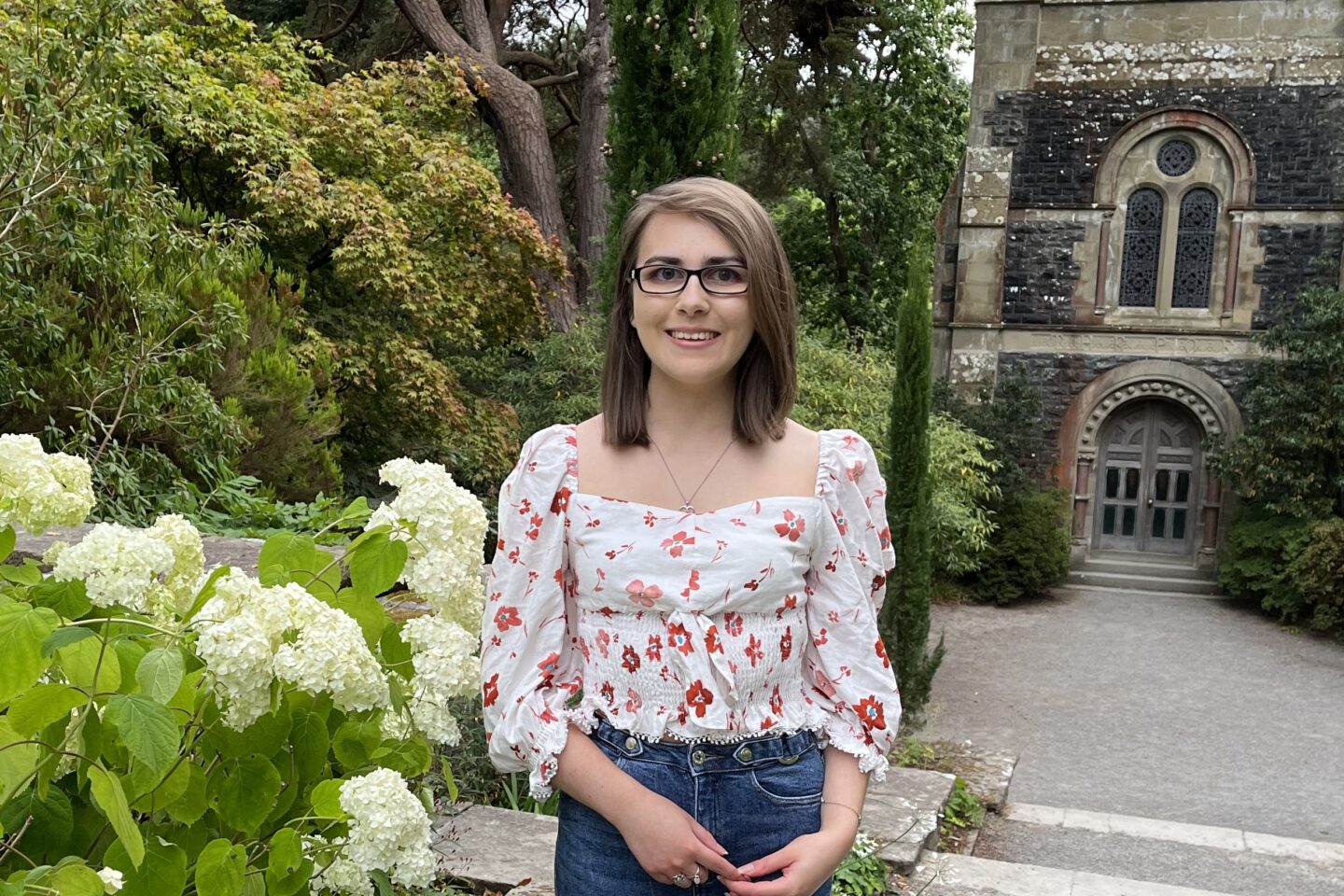
As an advocate myself, I spent many an hour throughout July mulling over what I wanted my contribution to the conversation to be but I came up short in every brainstorming session. The space where I expected ideas to blossom became a chasm, allowing a slither of guilt to slip into the gap between my fingers and my phone screen every time I opened and closed social media not having shared my two cents.
Taking a step back and acting as more of an observer did afford me the space to think, though, and I caught myself wondering about a lot of things relating to pride, disability rights and why these opportunities to celebrate our identities slip so far under the radar.
So, here’s my take on Disability Pride Month as a fashionably late arrival to the party. Don’t leave just yet.
Disability Pride
Growing up as a disabled person, my mind has processed a lot and my heart has felt a lot. Confronted with different symptoms and bouts of deterioration, my attitude towards my vision impairment has altered dramatically during different moments of my life. I wrote a whole timeline on the varying feelings, in fact, if that’s something you fancy reading.
Sitting here and reflecting, I realise that my sense of pride in living as a disabled person was never tainted due to these emotions but rather the attitudes entrenched in society.
I was highly aware of how non-disabled people perceived me from a very young age courtesy of comments traded between children and later teenagers at school. but there were moments in my ascension from childhood to adulthood where, without really knowing or understanding, I was internalising a quiet disdain for the part of me that resulted in others labelling me as ‘different’.
Any moment of pride I conveyed was questioned with people asking how I can be so positive, as if happiness isn’t something I’m meant to seek out or feel as a disabled person.
So much of society has subscribed to such misconceptions for years, but it’s disabled people who pay the price.
This ableism presents a peculiar equilibrium, one in which the see-saw is so weighed down by stereotypes and preconceived ideas that we rarely get the opportunity to rise to the height of the other side to see the fact that we have a place here and we have a right to claim it.
The world often sees my impairment before it sees me and breathing in these stereotypes meant that I wasn’t breathing out as much pride as I now know I have the right to.
There’s no doubt that I internalised some of the ableism I’ve come across over the years and it wasn’t until I became familiar with the Social Model of Disability a few years ago that I was able to unlearn some of those attitudes. Had I have known about it sooner and been aware of the concept of disability pride, I think it would have been a different story.
With the rise of Disability Pride Month, I do think the narrative is slowly changing with so many disabled people claiming their rights, their identities and calling out the ableist attitudes and barriers that saturate our world. Unfortunately, Disability Pride, and other awareness months and days, still aren’t given the recognition they deserve beyond the internal circle of disabled people. And going off my own experience, my bet is that it’s unknown to many disabled people themselves too.


My own disability pride celebrations have been tame but seeing so many disabled people sharing their stories online has been a timely tonic to a slightly overwhelming few months for me. Seeing so many people taking pride in claiming their space in society, realising their rights and sharing their journeys with others is empowering.
It’s this pride that runs parallel to my own. Seeing so many disabled people sharing it is a luxury I didn’t have when navigating my childhood and teenage years which is why we need to amplify disabled people’s voices to make sure disabled youngsters grow up knowing that they have a place, they have rights and they belong.
Allies should rally to spread that message, to realise the importance of things such as disability pride, disability history month and the International Day of Disabled People. It’s a wasted opportunity for brands and organisations not to work with disabled people to share our stories and profile the issues that matter to us.
I am a strong believer that conversations about our rights and our history as disabled people shouldn’t be reserved for one month alone, but it’s a good catalyst for longer-lasting discussions. I can only hope that as more of us speak out, more people will start to listen and stand with us as allies.
So many disabled people spend years trying to unlearn the ableism we’re confronted with, it’s time society dedicates time to doing the same.
I know that disability pride celebrations aren’t for everyone since each person’s journey is unique and personal to them. If you don’t feel a sense of pride in living with your impairment, your feelings are more than valid. Disability Pride Month isn’t about disabled people telling each other how to feel, it’s about telling the world that we are here and we are equal. Something that should be recognised and celebrated all year round.
If you are open to seeking some reassurance or learning how others are finding pride in their identities as disabled people, you only have to search the hashtag on Twitter to find a stream of posts blooming with identities spanning so many different places and backgrounds. People’s experiences and stories are all different but we are all unified by our pursuit of equality and that truly shines through in all the content I’ve seen this month.
The mission that underpins it all is to amplify and uplift disabled people’s voices, to make sure that we are heard in a world that so often covers its ears. I’m truly thankful to all the disabled people who choose to share their journeys online. Learning about other people’s experiences has helped me to realise that I’m not alone and I hope that my own platform plays a small part in helping others recognise that for themselves too.
Pride isn’t one dimensional, it’s fluid, free to be shaped into what it best represents in your life. It took years for me to pinpoint how I identify with it, and it’s through the safe space of this blog that I’ve been able to work through a lot of the feelings and emotions that are linked to what I understand my own pride to be today.

In my experience, acceptance is something that ebbs and flows courtesy of my deteriorating condition but a sense of pride will always ground me when I need it to. I feel pride in the way I deal with loss, in the positive attitude I have and in the way I funnel my experiences into blog posts like this and into my role as a mentor for young vision impaired people in the hope of making a difference, no matter how small. Ultimately, I feel pride in the way I’m claiming my space in a world that quite often tells me I don’t belong. That’s what disability pride means to me. And finally, finally, I’m owning it.
I’d love to know your thoughts on Disability Pride Month, is it something you knew about? You can also tell me how you identify with pride if you feel comfortable in doing so. Whatever your take on it, I think it’s important to recognise that everyone’s experiences are different and every emotion you feel is valid. My biggest sense of pride came when I found others who are in a similar situation and realising that there is always reassurance out there. Sometimes, knowing that is enough. Happy Disability Pride everyone.
Elin x
Share this:

Discover more from My Blurred World
Subscribe to get the latest posts sent to your email.
You May Also Like


The Comments
Liminal Lizzy
Like you, I wasn’t aware of Disability Pride month until a couple years ago – I work in a healthcare profession centered around disabled people and didn’t learn about it in school, nor the first several years after entering the disabled community via a sleep disorder diagnosis. My feelings about pride have also fluctuated over the years, and I’ve yet to publicly comment on the topic, but as you said, ‘pride’ isn’t really about one month or a single occasion. It’s for any time we can, and choose, to interact with it.